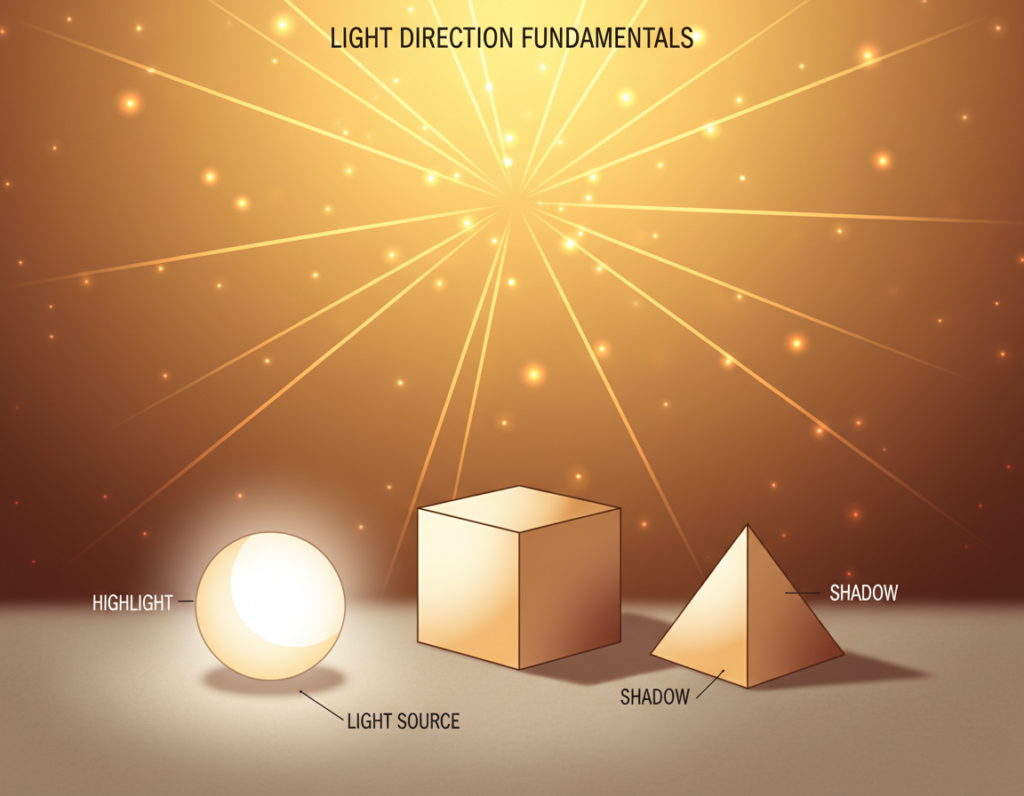
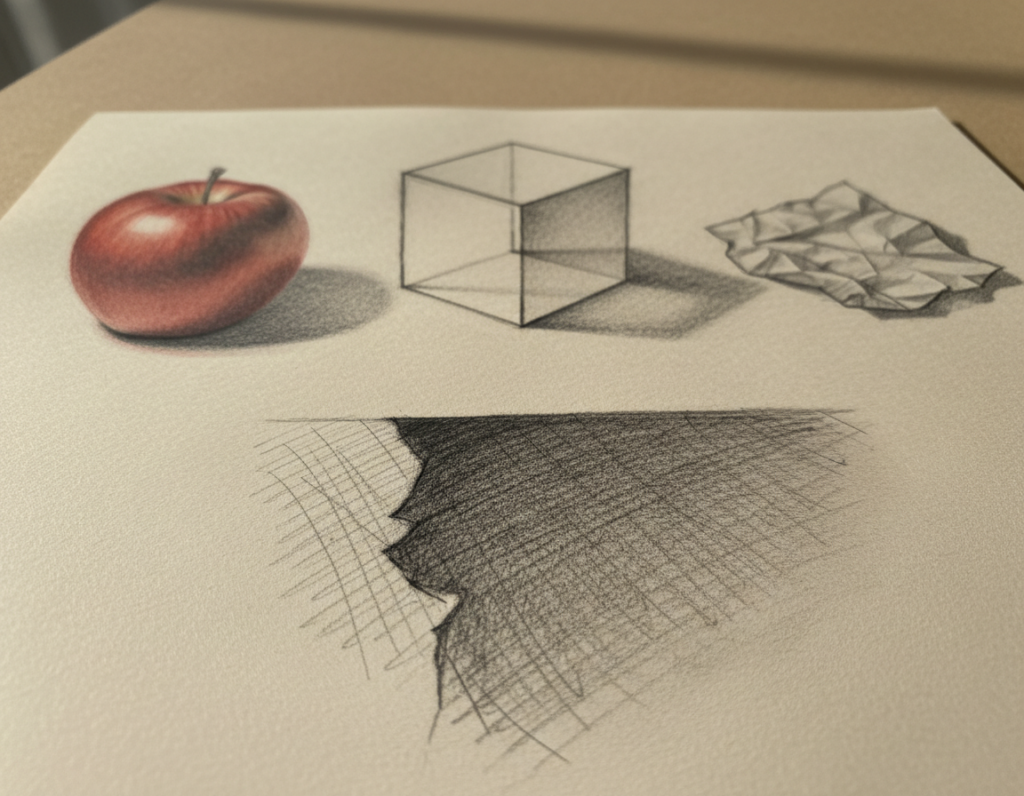
Mastering simple shapes unlocks better accuracy and speed in art. Over 36,000 newsletter subscribers have used this approach to simplify complex objects into clear structure. You will learn to see volumes as cubes, cylinders, and spheres so objects read well in two-dimensional space.
The method uses lines, light, and contour to turn what you see into a confident sketch. This way of seeing helps you plan space and decide where to add detail.
By following short lessons and steady practice you can build lasting skills. A 25-day course offers examples and step-by-step practice that fit even if you only have a bit of time each day.
Key advantage: clear structure before detail lets every object feel grounded and believable, giving you a better sense of form and light as you work.
Understanding the Fundamentals of Construction
Identify the main volumes first so each part of your subject sits convincingly in space.
Construction is a core lesson that shows how to build a solid structure for your art. Think of it like a foundation for a house: the rest depends on what you set down first.
In the 25 Days to Better Drawings course you learn to reduce objects into simple shapes. This way you find correct proportion quickly and avoid chasing surface detail.
- Break subjects into blocks to save time and keep every line purposeful.
- Use contour and light to turn flat sketches into believable form.
- Practice short exercises to lock in the basics of structure and space.
- Study how simple shapes relate so you can build complex objects with confidence.
Focus on the process, not only the result. With a steady routine, each lesson compounds. Over time your drawings will feel stronger, clearer, and more professional.
The Four Essential Basic Drawing Forms Construction Techniques
Four core solids give your work structural clarity and make complex subjects manageable. These models are the backbone of many early animation practices and still guide modern practice.
Spheres and Cylinders
Start with a sphere to map volume and a cylinder to show direction. Use gentle contour lines to indicate rotation and a single line of axis to set tilt.
One short video lesson shows how light falls across a cylinder and how that light helps convey weight on the page.
Cubes and Wedges
Cubes lock in perspective and wedges solve complex joins. Practice these on a blank page to learn how separate shapes combine in space.
- Tip: Work through quick exercises that pair a cube with a cylinder to see motion and overlap.
- Videos and short lessons teach how lines and contour give your drawings a sense of volume and light.
- Keep studies small and steady so every line earns its place.
How to Deconstruct Complex Objects into Simple Shapes
Look for the bold, simple shapes that organize weight and direction before you mark any detail. Let your eye move across the subject and pick out big planes, then follow the main lines that define them.
The Process of Observation
Observation is a repeatable process. Strip surface texture and focus on the large volumes that make the object read in space. This step turns chaotic detail into clear, usable information.
- Search for boxes, cylinders, or spheres as the first step in your construction.
- Use a single axis line to set tilt, then add contour lines to suggest rotation and light.
- Practice with a photo reference, but build the object in 3D in your mind instead of copying lines.
- Study each example as a sequence of small steps; this saves time and improves your sense of form.
“Take time to analyze the subject — the information you gather makes the final result believable.”
Result: you will turn complex things into clear steps, and every line will serve a purpose in the art of portraying space.
Mastering Spheres and Cylinders for Organic Forms
To capture living shapes, learn to wrap simple solids with lines that suggest motion.
Mastering spheres and cylinders is essential for creating organic forms. These shapes set gesture and rhythm so your work reads as a single, believable object.
In this lesson you add a bit of dimension by drawing circumference lines that wrap the volume. That single line shows rotation and helps place light on the surface.
- Practice a sphere to establish mass, then attach a cylinder to set direction and flow.
- Use contour lines on cylinders to clarify the direction of limbs or branches.
- Combine cubes with spheres and cylinders for more accurate, detailed results.
Every example in the course demonstrates how these shapes build complex subjects. Follow the step-by-step process and your sketches will stay solid and three-dimensional.
“Wrap volume with clear lines and the rest of the detail will fall into place.”
Utilizing Cubes to Clarify Perspective and Structure
Framing a soft shape with a box reveals its orientation in space and simplifies decisions.
Cubes are a fast way to check perspective. Use them to see where edges meet and how planes tilt on the page.
Defining Direction with Circumference Lines
Start by drawing a simple cube around the object. Add circumference lines to each face to show rotation and the axis of motion.
These lines guide the eye and make the direction of a limb or cylinder clear. The technique helps you place light and shadow later.
Using Cubes as Scaffolding
Convert uncertain masses into cubes or a series of boxes. This scaffolding fixes perspective and keeps every element aligned in the world you build.
- Use a Rubik’s Cube or a photo reference in a short video lesson to study rotation.
- Practice exercises that pair cubes with cylinders to see how shapes meet in space.
- When in doubt, box the object first, then add contour and final lines.
“When you box an object, the rest of the drawing fits the rules you set.”
Incorporating Wedges for Complex Compound Forms
Cutting a cube into a wedge gives you a quick way to introduce angular detail without losing volume.
Wedges are made by slicing a cube diagonally. That simple change creates a specialized piece that fits shoulders, noses, or feet on cartoon characters.
Combine wedges with spheres, cylinders, and cubes to build a believable object. The wedge adds the final, sharp information that rounded solids often lack.
Use clear contour and a guiding line to show how a wedge sits in space. This keeps the illusion of depth and prevents the element from looking flat on the page.
- Tip: place a wedge where two planes need a clean meet — it defines the edge fast.
- Every example shows wedges rarely steal the show but they finish the model with confidence.
- Work wedges into studies with cylinders and cubes to see how they alter light and shadow.
“Add a wedge and small angular decisions suddenly read as deliberate structure.”
Practical Exercises for Developing Spatial Reasoning
Short, focused exercises sharpen the eye and teach you to place shapes in space with confidence. These drills build a clear sense of volume and help every line earn its place on the page.
Drawing Cartoon Heads
Start with a sphere and add circumference lines to set the tilt. Place the eyes and nose using that axis so features sit in 3D.
Practice: do 6 head studies, vary tilt and scale, and mark landmark lines for the eyes.
Building Torso Structures
Stack cylinders to map chest, ribcage, and pelvis. This step shows how different forms connect while keeping perspective true.
Use 4 pages of Form Intersections and 2 pages of Organic Intersections with an ink fineliner to train this sense.
Adding Limbs and Joints
Render arms and legs as simple cylinders. Add joints as small boxes or wedges to show pivot and weight.
- Do short gesture lines, then refine with contour and a single axis line.
- If stuck, use a reference object — it’s standard practice at every level.
- These exercises give the information you need to move beyond simple shapes to solid, professional-looking drawings.
Conclusion
When you frame each object as a set of clear volumes, planning feels faster and more reliable. This approach makes every line purposeful and gives your work a firm form.
Use steady practice to break subjects into simple pieces. With time your drawing speed and accuracy will improve. The method helps you see 3D space so your art reads as solid and believable.
Keep returning to short studies. As you apply these techniques, handling complex subjects becomes second nature. Focus on the process, not just the result, and the quality of your work will follow.