Anúncios
Understanding edges is essential for any artist who wants clearer forms and convincing depth. Nicolai Fechin’s 1908 The Lady in Purple shows how controlled handling in a painting creates readable forms that guide the eye.
Start by watching the transition between light and dark values. Notice a small change in plane, color, or shadow and you will see an example of an edge that defines a form. Pay attention to surface cues and the value shift; this is the right way to capture what you see.
With short, focused studies you will save time. Learn to read shapes, refine an edge, and place shadow with accuracy. Over time, this method will raise your drawing to a professional level by giving you the tools to give every line clear purpose.
Understanding the Role of Edges in Pencil Drawing
Observe how a soft shift along a contour turns a flat outline into a believable form. John Singer Sargent’s The Cliffs at Deir El-Bahri, 1891, shows how edges define the transition between land and sky in a painting.
Every artist must see that a shape is more than an outline. A proper edge tells the viewer which face is the side and which is the top. Even a small change in value or a light dark contrast can alter how we read an object.
Anúncios
Study how light strikes a subject. That study helps you place shadow and suggest volume. Simplifying things into basic shapes makes it easier to control form and value.
- Edges mark plane transition and guide attention in composition.
- Use tiny shifts in tone to suggest depth without heavy lines.
- Practice comparing adjacent values to refine a realistic face or object.
In short, mastering how edges respond to light will lift your drawing and make forms read with clarity.
Mastering Edge Types Drawing Fundamentals
Deciding when to sharpen or soften a line will make your forms read with clarity. This short guide shows when to use a hard mark, a gentle blend, or a vanishing boundary to lead the eye through a composition.
Anúncios
Hard Edges
Hard edges create an abrupt transition between areas. Use them where two planes meet or where you want to catch the viewer’s attention.
Place a crisp mark at a corner or where a shadow meets a highlight. You’ll see that a sharp line anchors a shape and defines the side that faces the light.
Soft Edges
Soft edges gently blend value across the surface. They work well on rounded forms and subtle shifts in tone.
Use soft treatment to suggest depth without competing with focal areas. Practice making small tonal shifts and compare adjacent values to keep control.
Lost Edges
A lost edge dissolves into the background and is useful for distance or atmosphere. Peder Severin Krøyer’s 1893 painting, Summer Evening on Skagen’s Southern Beach, is an example of a lost edge merging the horizon.
- Decide which area needs emphasis and which can fade.
- Pay attention to every corner; each choice affects the composition.
- Practice different ways to render one shape until the forms read easily.
In time, using these options will help guide attention and strengthen your drawing.
Factors That Influence How We Perceive Edges
Light and atmosphere decide how sharply we read a form from a distance. Claude Monet’s Waterloo Bridge, Fog (1903) is a classic example of how haze and sun alter what we see in a painting.
The Impact of Light and Atmosphere
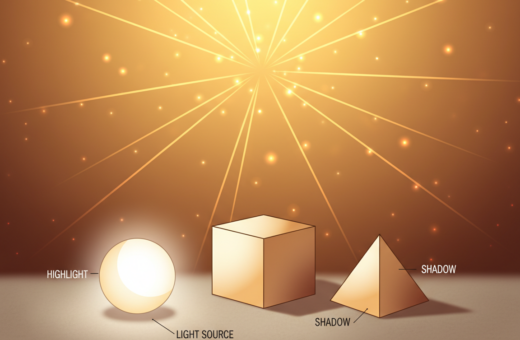
A strong light source makes an edge look crisp by increasing contrast between light and shadow.
Diffuse light softens the transition and reduces contrast. That change makes distant shapes fade and gives scenes a subtle depth.
- Monet shows how fog blurs edges and lowers contrast in a landscape.
- Objects far away will have a softer edge than those close to the viewer.
- Use your knowledge of atmosphere to decide whether to sharpen or soften a mark.
Train your eye to compare adjacent values and watch how shadow and light interact. Every small change in the environment shifts the sense of depth in your work and guides how you render each shape.
Techniques for Identifying Edges in Your Subject
Learn to pick the sharpest transitions in a scene by comparing nearby tones. This simple process helps you decide which marks should be firm and which should soften.
Look at Joaquín Sorolla’s Fishermen from Valencia (1895). In that painting, the hardest edge anchors the focal point and guides the eye across the composition.
When you study an area, ask how light and shadow change the way a form reads. Compare adjacent shapes and rank the transitions from hardest to softest.
You’ll see that by ordering these transitions you make a more accurate map of value and form. Take time to analyze each part and avoid guessing which mark belongs where.
- Compare small patches of tone rather than whole shapes.
- Rank the sharpest contrasts first, then note the subtler shifts.
- Practice this process regularly to improve the way you render an object.
Every artist should practice this technique. With steady practice, you’ll see fewer mistakes and clearer, more convincing drawings and paintings.
Applying Edge Variations to Enhance Form and Depth
Varying how you treat a boundary can turn a flat sketch into a convincing form. Use contrast, softness, and the strategic loss of detail to shape volume and guide attention across a composition.
Using Comparison for Relative Hardness
Compare small patches of tone rather than whole shapes. Place two adjacent areas side by side and ask which needs the firmer mark.
This method helps you rank the relative hardness of each transition and define the surface of an object with confidence.
Positioning Edges for Focal Points
Berthe Morisot’s Nanny Angela, Feeding Julie Manet (1880) shows how varying treatment enhances depth and focus.
Place your hardest mark near the focal point to pull the eye, and keep surrounding shadow areas soft so the scene keeps depth.
- A lost edge can direct attention by letting surrounding shapes recede.
- Consider every corner of the composition; each transition affects overall form.
- Work intentionally so every piece contributes to a cohesive, realistic final image.
Drawing Rounded Edges in Perspective
Begin by sketching a square base so you can see how a rounded corner sits in perspective. This simple start keeps each side true as the form recedes and makes the rest of the process faster and clearer.
Remember that every rounded corner is essentially a quarter of a circle. Project that curve onto the planes of your cube and watch how the transition wraps the face. Pay attention to how light and shadow follow the curvature; value must travel with the form to sell the illusion.
- Draw a square base and mark vanishing points for perspective.
- Place the quarter-circle at the corner and use a 2/3–1/3 ratio to set its arc.
- Refine the projected curve across adjacent surfaces so the surface reads smoothly.
- Shade along the curve so shadow and highlight follow the rounded form.
Use Sketchbook Pro or similar software to iterate quickly. With steady practice, these steps will give your work better form, clearer edges, and stronger attention to surface detail.
Conclusion
,Small choices at a boundary decide how the whole object will read. Practice will make you spot subtle shifts in value and treat each junction with purpose.
Remember that how you handle even one edge can change the perceived shape and the mood of a painting. Keep studies short, compare adjacent tones, and make decisions that support the focal area.
With steady work, any artist will gain confidence in rendering form. Apply these techniques and your drawing and painting will show clearer form, truer value, and stronger presence.
Thank you for reading. We hope this guide helps you define objects with more precision and encourages you to keep practicing your art.