Anúncios
Master the alphanumeric scale to pick the right pencils for light sketching or deep shading. Many people call the core “lead,” but it is a safe form of carbon that sits inside a wooden pencil.
Knowing how hardness and softness affect marks helps artists control value, texture, and tone. This guide shows how the number and letter on the end of a pencil change the point and the way lighter marks or darker strokes behave.
We will cover pressure, the feel of the graphite core, and which graphite pencils or drawing pencils work best for sketches, shading, and technical work. Learn to layer tones without harming the paper and get cleaner lines for professional results.
Understanding Graphite Grades Explained Drawing
Knowing how pencil labels map to hardness and blackness helps artists choose the right tool for each stroke.
The mark on the side or the end of a pencil is a quick guide to its behaviour. The alphanumeric scale shows whether the core will hold a sharp point or lay down rich, dark tones.
Anúncios
Think of a #2 writing pencil: it matches an HB grade and sits in the middle of the range. That makes it a reliable choice for both sketching and writing tasks.
Understanding the mixture of graphite and binder explains why some sticks give lighter marks while others create deep darkness. Pressure and the core composition shape value, texture, and line quality.
- The letter on the pencil tells its class: H for hardness, B for blackness.
- Harder pencils keep a fine point for precise lines and light sketching.
- Softer graphite produces darker, more expressive marks for shading and bold strokes.
The Science Behind Graphite Cores
A pencil’s inner mix decides how it behaves on paper. The core combines a form of carbon with a clay binder to shape point retention, tone, and texture. This blend is why some pencils stay sharp while others give softer, darker marks.
Anúncios
Composition of Graphite
The core is a measured mixture of carbon and binder. A higher ratio of carbon makes the core softer and richer in darkness. More binder produces a harder pencil that leaves lighter marks and holds a fine point for technical work.
The Myth of Lead
Modern pencils contain no lead. Despite the old term, the material is safe for artists and children. Understanding the mixture and how pressure changes value helps you pick the right tools for sketching, shading, and writing.
- The amount of binder controls hardness and the usable range of tones.
- Apply more pressure to increase darkness without changing the grade.
- Wood quality affects how easily the pencil sharpens to a precise point.
Decoding the Alphanumeric Grading Scale
The alphanumeric code stamped on a pencil tells you at a glance how it will behave on paper.
The scale groups pencils by the hardness or softness of the graphite core, with HB sitting squarely in the middle. H stands for hard and B stands for black. An HB pencil balances point retention and tone, so it works well for both writing and light sketching.
Numbers change the effect. A higher number before H (for example, 4H) makes a much harder pencil that leaves very light marks. A higher number before B (for example, 4B) means a softer pencil that produces darker tones and richer texture.
- F sits between HB and H and sharpens to a fine point for precise lines.
- Manufacturers tune the mixture of carbon and binder so each grade performs predictably.
- Using a range from the scale helps artists build value and form by layering light to dark tones.
Mastering this system gives you clearer control over lines, marks, and shading for technical work or expressive sketches.
Characteristics of Hard Graphite Pencils
A harder point helps artists fill the paper’s tooth while keeping tones subtle and controlled.
Benefits of Harder Cores
Hard pencils produce lighter marks because less material transfers under normal pressure. They are ideal when you want crisp lines and minimal smudging.
Use a 2H or 4H pencil to lay a light foundation before moving to softer, darker grades for shading. Harder cores contain more binder, so the point stays sharp and lasts longer during technical work.
- Excellent for clean lines and precise form in architectural or technical sketches.
- Maintain a fine point for long sessions, reducing the need to sharpen often.
- Allow light pressure to create subtle tones and to fill paper texture smoothly.
- Avoid heavy pressure; hard leads can press grooves into the surface and damage paper.
- Combine with softer pencils for full value range—hard pencils for layout, softer for depth.
Exploring the Versatility of Soft Graphite Pencils
A softer core gives you instant access to deep shadow and velvety tones. These pencils are essential when your goal is strong contrast and tactile texture.
Achieving Darker Values
Soft graphite pencils, labeled with a B, let artists reach very dark marks quickly. The higher the B number, the more material the lead releases and the darker the tone you can build.
Use a 6B or 8B to anchor final shadows and deepen form. Manage pressure to avoid shine and over-saturation of the paper.
Blending Techniques
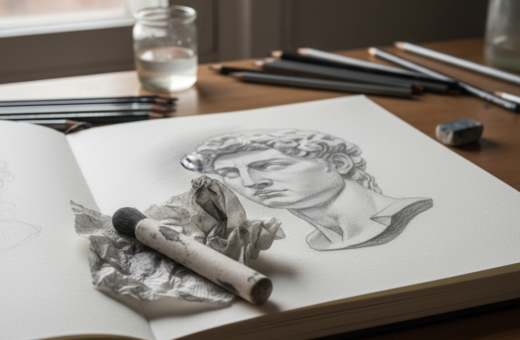
Softer pencils glide across the surface, making smooth transitions easy to create. Layer soft marks, then blend with a stump, tissue, or fingertip to form gradients.
- Start light and increase pressure for midtones and darks.
- Alternate a softer pencil with a harder pencil for texture and crisp lines.
- Sharpen often—soft leads dull fast but reward you with rich value.
The Role of the F Grade Pencil
If you need a pencil that stays keen longer than an HB but still lays down visible tones, try the F grade.
The F grade pencil sits between HB and H on the scale and offers a slightly harder core than HB. It produces marks similar to HB, though a touch lighter, while keeping a fine point for longer use.
Artists and professionals favor the F pencil for precise writing, technical work, and mild detail in sketches. It is a practical choice when an HB dulls too fast but an H feels too light.
- The F pencil supports a wide tonal range suitable for quick studies and preliminary work.
- It holds its point, so lines stay crisp and clean during long sessions.
- Keep one in your kit to balance precision with usable darkness across most tasks.
In short, the F is a reliable, versatile tool for sketches, writing, and technical drawings where point retention and consistent marks matter.
Factors Influencing Your Pencil Selection
A simple test stroke on your paper will tell you more than labels alone. Your choice should match the sheet, your touch, and the look you want to achieve.
Paper Texture
The texture of your paper matters. Rougher, toothy sheets grab more material from softer graphite pencils. That yields richer tones and visible texture.
Smoother, hot-pressed papers favor a harder pencil for fine lines and neat writing. Try swatches on each paper to see how marks behave.
Hand Pressure
How hard you press changes the effective grade. If you naturally use heavy pressure, a 4B may be the darkest tool you need. Light touch users often select soft pencils like 6B or 8B to get deep darkness without force.
Artistic Goals
Your intended work guides the kit you pack. Portrait artists usually pick softer graphite for blending and value. Drafters prefer harder cores for crisp lines and technical form.
- Test combinations of paper and pencil to find your match.
- Adjust choice by project—quick sketches, refined shading, or precise lines.
- Professional artists swap pencils to control value, texture, and the final mark.
Best Practices for Layering and Value
Layering builds depth: begin with paler strokes and move toward richer tones. Start with a harder pencil to mark light planes and keep your layout flexible.
Apply graphite in thin, even passes so the surface stays matte and avoids shiny buildup. Light layers let you test composition and preserve the paper’s tooth for later work.
Keep pressure steady. Heavy early strokes flatten texture and block further layers. If the work gains unwanted shine, try a light fixative or ease your pressure to let new marks sit cleanly.
“Work from light to dark to maintain control and avoid muddy midtones.”
- Use a small set of pencils across the scale to cover a wide range without clutter.
- Consistent pressure and tiny, overlapping strokes make smooth tonal transitions.
- Combine harder and softer pencil types to build form, texture, and realistic value.
Choosing Quality Drawing Tools
Pick pencils that match your goals. A reliable pencil reacts predictably to pressure and holds a point when you need crisp lines or soft tones. Good tools speed workflow and help you build value with less fuss.
Start with proven brands. Derwent Graphic, Prismacolor Turquoise, and Staedtler Mars Lumograph offer consistent grading and smooth cores. The General’s Layout pencil is a favorite when artists want rich, dark marks that resist quick dulling.
Recommended Brands
- Derwent Graphic — consistent cores and clean marks across the scale for sketches and fine work.
- Staedtler Mars Lumograph — excellent hardness range and durable point retention for technical lines.
- Prismacolor Turquoise — smooth feel and reliable darkness for shading and form.
- General’s Layout — offers deep tones like a 4B with surprising durability.
- Faber-Castell 9000 — wide range of grades and a high-quality graphite core favored by many professionals.
Practical tips: look for consistent grading, sturdy wood casings that sharpen cleanly, and hex barrels for grip and anti-roll. Start with a small range of grades and expand as your work and needs evolve.
Final Thoughts on Mastering Graphite
, A confident hand comes from learning how each pencil responds to pressure and paper. Small tests reveal how the hardness or softness of the core affects line, tone, and texture.
Mastering the scale means choosing the right pencils for light sketching, bold shading, or detailed writing. Use a range of pencil types to reach the full value and form you want in your work.
Practice remains the best tool—keep your pencils sharp, swap grades as you build value, and test marks on the paper you plan to use. For smoother transitions, try these practical blending techniques.
In short, study the scale, experiment with pressure, and organize your tools. With patience and steady practice, artists at every level can raise their sketches and final drawings to a new level.