Anúncios
- Smooth transitions are vital for adding depth and realism to any sketch.
- Consistency in layering helps artists achieve professional and polished results.
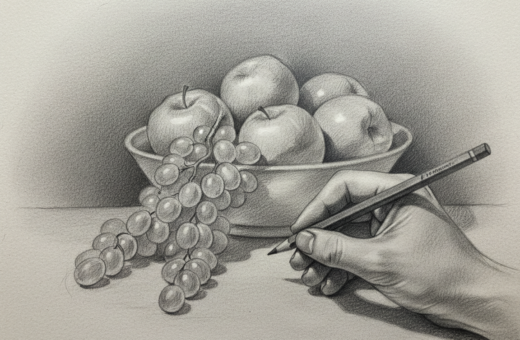
Making realistic depth in a drawing requires a soft touch and a thoughtful approach. Masterful shading creates a sense of life that flat lines simply cannot achieve.
Understanding various pencil blending techniques helps artists move beyond basic sketches. Mastering these skills allows you to soften harsh edges and build layers of value seamlessly.
Achieving smooth gradients is essential for capturing the play of light on soft skin or metal. This process transforms a simple outline into a three-dimensional work that looks real.
Precision and patience are the true secrets behind every stunning piece of pencil art. Professional results come from practicing specific strokes and knowing how to control your medium.
Gaining control over your tools allows for more expressive and detailed drawings. This guide explores the key methods needed to elevate your creative work to new heights.
Anúncios
Understanding Pencil Gradients and Why Blending Matters
To create realistic and captivating pencil art, understanding the nuances of gradients and blending is essential. Gradients are a crucial element in drawing, allowing artists to convey depth, dimension, and emotion in their work.
A smooth gradient is characterized by a seamless transition between different shades or tones, creating a natural and cohesive visual effect. The key to achieving this lies in the blending process, which involves merging pencil marks to eliminate harsh lines and visible transitions.
What Makes a Gradient Smooth
A smooth gradient is achieved when the transition between different tones is imperceptible to the naked eye. This is accomplished through careful layering and blending of pencil marks. The smoothness of a gradient depends on several factors, including the quality of the pencils used, the texture of the paper, and the blending techniques employed.
Anúncios
As noted by renowned artist,
“The subtlety of a gradient can make or break the realism of a drawing. It’s all about creating a natural flow of tones.”
| Factor | Impact on Gradient Smoothness |
|---|---|
| Pencil Quality | High-quality pencils with consistent graphite cores produce more predictable and smooth gradients. |
| Paper Texture | Smooth paper allows for finer detail and more even blending, while textured paper can create more dynamic, expressive gradients. |
| Blending Technique | The choice of blending tool and technique significantly affects the smoothness and evenness of the gradient. |
The Role of Blending in Professional Artwork
Blending is a critical skill for artists aiming to produce professional-grade pencil artwork. It allows for the creation of nuanced, detailed, and realistic representations. Professional artists often spend considerable time mastering various blending techniques to achieve the desired effects in their work.
Effective blending can elevate a piece from a simple drawing to a sophisticated work of art, capturing subtle variations in tone and texture that engage the viewer.
Common Uses of Gradients in Drawing
Gradients are used in a wide range of drawing applications, from portrait and landscape art to still-life compositions. They are particularly useful for creating realistic skies, skin tones, and fabric textures, among other subjects.
By mastering gradients and blending techniques, artists can add depth, dimension, and emotion to their work, enhancing its overall impact and appeal.
Essential Tools for Pencil Blending Techniques
Mastering pencil blending techniques requires the right tools, and artists have a variety of options at their disposal. The choice of tool can significantly affect the outcome of the artwork, making it crucial to understand the function and application of each.
Blending Stumps and Tortillons
Blending stumps and tortillons are fundamental tools for any artist working with pencils. Both are used for blending and smoothing out graphite marks, but they have distinct differences in terms of their construction and application.
Differences Between Stumps and Tortillons
Blending stumps are typically made from tightly rolled paper and are used for broader areas of blending. Tortillons, on the other hand, are made from a harder, more tightly compressed paper and are usually more pointed, allowing for more precise blending in smaller areas.
When to Use Each Tool
Use blending stumps for larger areas where a softer blending effect is desired. Tortillons are ideal for detailed work and for creating fine transitions between different shades.
“The right tool can make all the difference in achieving the desired effect in your artwork.”
Paper Towels and Soft Tissues
Paper towels and soft tissues are readily available and can be used for blending and creating subtle transitions. They are particularly useful for lifting graphite and can be used to create soft, hazy effects.
Cotton Swabs and Makeup Sponges
Cotton swabs are excellent for detailed blending in very small areas, while makeup sponges can be used to create unique textures and blending effects. Both tools offer a level of precision and control that can be beneficial for detailed work.
Chamois Cloth and Blending Brushes
A chamois cloth can be used to smooth out large areas and create even transitions. Blending brushes, typically made from soft materials, are used for gentle blending and can be particularly effective in maintaining the integrity of the paper surface.
As “The Artist’s Handbook” suggests, “The key to successful blending lies in choosing the right tool for the specific task at hand and mastering its use.”
Choosing the Right Pencils for Gradient Work
To master gradient work, understanding the appropriate pencil selection is key. The right pencils can significantly enhance the smoothness and quality of your gradients.
Graphite pencils are the primary tools for creating gradients. They come in a range of hardness levels, which are crucial for achieving various shading techniques.
Understanding the Graphite Hardness Scale
The graphite hardness scale ranges from very soft (9B) to very hard (9H), with HB being the middle point. Softer pencils (B range) produce darker, more expressive lines, while harder pencils (H range) create lighter, finer lines.
For gradient work, having a range of pencils across this scale is essential. Softer pencils are ideal for darker areas and blending, while harder pencils are better suited for creating fine details and lighter shades.
Best Pencil Combinations for Smooth Transitions
To achieve smooth transitions in your gradients, it’s advisable to use a combination of pencils. A common approach is to start with a harder pencil (like 2H or 4H) for the lightest areas and gradually move to softer pencils (like 2B, 4B, 6B) for the darker areas.
This gradual transition helps in creating seamless gradients. It’s also beneficial to blend between layers using appropriate pencil blending techniques.
Colored Pencils vs. Graphite for Blending
While graphite pencils are ideal for monochromatic gradient work, colored pencils can be used for colored gradients. Colored pencils offer a wide range of colors and can be blended to create smooth transitions.
However, graphite pencils remain the preferred choice for shading techniques that require subtle transitions and deep blacks. The choice between colored pencils and graphite ultimately depends on the desired outcome of your artwork.
Understanding the strengths of each can help you make informed decisions for your gradient work.
Paper Selection and Surface Texture Impact
The texture and quality of the paper significantly impact the blending results in pencil artwork. When creating smooth gradients, artists must consider the characteristics of their paper to achieve the desired outcome.
The “tooth” of the paper, which refers to its surface texture, plays a crucial role in how well pencils blend on it. Papers with a finer tooth tend to produce smoother blends, while those with a coarser tooth can result in more textured, expressive blends.
How Paper Tooth Affects Blending Results
The tooth of the paper affects how graphite or colored pencil marks interact with the surface. A smoother paper allows for more even distribution of graphite, making it easier to achieve fine gradients. In contrast, a paper with a lot of texture can cause the pencil marks to skip or catch on the peaks of the texture, leading to uneven blending.
Key considerations for paper tooth include:
- The level of smoothness required for the artwork
- The type of pencils being used (graphite, colored, or a combination)
- The desired texture or finish of the final piece
Smooth Paper Options for Fine Gradients
For artists seeking to create fine gradients, smooth paper is often the preferred choice. Some popular options include:
- Hot Press Watercolor Paper
- Bristol Board
- Smooth Cartridge Paper
These papers offer a fine tooth that allows for smooth blending and detailed work.
Recommended Paper Weights for Different Techniques
Paper weight, measured in grams per square meter (gsm), is another critical factor in paper selection. Heavier papers are generally more durable and less prone to buckling or tearing when subjected to heavy blending or multiple layers of pencil work.
Recommended paper weights include:
| Technique | Recommended Paper Weight (gsm) |
|---|---|
| Light blending and sketching | 80-100 gsm |
| Detailed work and layering | 150-200 gsm |
| Heavy blending and burnishing | 300 gsm or higher |
By choosing the right paper based on its tooth and weight, artists can significantly improve their pencil blending results and achieve the desired level of smoothness in their gradients.
The Layering Method for Seamless Gradients
The layering method is a fundamental technique for creating smooth gradients that enhance the realism of pencil drawings. This approach involves building up layers of graphite or colored pencil marks to achieve a desired level of shading and depth.
Starting with Light Foundational Layers
To begin the layering process, start with light foundational layers. This initial layer should be applied evenly and lightly, setting the base tone for the gradient. Using a sharp pencil with a hard graphite core (such as 2H or 4H) is recommended for this step, as it allows for precise control and minimal smudging.
Building Gradual Tonal Transitions
Once the foundational layer is established, gradually build up the tone by applying subsequent layers. Each layer should be slightly darker than the last, achieved by either using a softer pencil or applying more pressure. The key is to make gradual transitions between layers, ensuring that the gradient appears smooth and natural.
Controlling Pencil Pressure Throughout the Process
Controlling pencil pressure is crucial for achieving a seamless gradient. Varying the pressure allows artists to achieve a range of tonal values without needing to switch pencils constantly.
Light Pressure Techniques
Light pressure is ideal for creating soft, subtle transitions in a gradient. By applying gentle pressure, artists can build up layers gradually without overpowering the previous layer.
Medium to Heavy Pressure Application
As the gradient deepens, increasing the pressure or switching to softer pencils can achieve darker tones. It’s essential to balance pressure with the pencil’s hardness to avoid damaging the paper or creating uneven textures.
Timing Your Blending Between Layers
The timing of blending between layers is critical for achieving a smooth gradient. Blending too early can muddy the layers, while blending too late may result in harsh transitions. Generally, it’s advisable to blend after every two to three layers, depending on the desired effect and the tools being used.
By mastering the layering method and understanding how to control pencil pressure and timing, artists can create seamless gradients that add depth and realism to their pencil artwork.
Circular Motion Blending Technique
To create seamless transitions in your artwork, the circular motion blending technique is essential. This method allows artists to achieve smooth gradients that enhance the overall quality of their pencil art.
Executing Proper Circular Hand Movements
The key to effective circular motion blending lies in the execution of smooth, continuous hand movements. Begin by holding your blending tool or finger gently but firmly, allowing for control without applying too much pressure.
Practice circular motions on a separate sheet of paper before applying the technique to your actual artwork. This will help you develop the necessary muscle memory and control.
Maintaining Consistent Pressure and Speed
Consistency is crucial when it comes to pressure and speed during the blending process. Apply gentle, uniform pressure to avoid creating uneven areas in your gradients.
Maintaining a consistent speed ensures that the blending is even and smooth. Practice maintaining a steady hand to achieve the best results.
Eliminating Harsh Lines and Visible Streaks
One of the primary goals of the circular motion blending technique is to eliminate harsh lines and visible streaks. To achieve this, focus on blending the edges of your strokes into the surrounding areas.
Using a gentle touch and smooth motions will help merge the pencil marks into a cohesive gradient.
Feathering Edges for Natural Transitions
Feathering the edges of your blended areas is a critical step in creating natural transitions. Gently soften the edges by applying light, circular motions with your blending tool or finger.
This technique helps to merge the blended area with the surrounding paper, creating a seamless transition.
| Technique Aspect | Description | Tip |
|---|---|---|
| Circular Hand Movements | Smooth, continuous motions | Practice on a separate sheet |
| Pressure and Speed | Consistent and gentle | Maintain a steady hand |
| Eliminating Harsh Lines | Blend edges into surrounding areas | Use gentle touch and smooth motions |
Burnishing for Ultra-Smooth Finishes
Burnishing is an advanced pencil blending technique used to achieve ultra-smooth finishes by applying significant pressure to the graphite layers. This method allows artists to create highly polished surfaces that reflect light uniformly, enhancing the overall appearance of their artwork.
What Burnishing Accomplishes in Gradient Work
Burnishing accomplishes several key objectives in gradient work. It helps to eliminate any remaining texture or visible pencil strokes, creating a uniform base that is ideal for detailed work or for displaying subtle transitions between shades. By applying intense pressure, burnishing compresses the graphite, making it smoother and more reflective.
Key benefits of burnishing include:
- Smooth, even surfaces
- Enhanced light reflection
- Reduced visibility of pencil strokes
- Improved overall finish quality
Selecting the Right Pencil for Burnishing
The choice of pencil for burnishing is critical. Typically, a very soft pencil (such as 6B or softer) is used because it contains a higher proportion of graphite and less binder, making it easier to compress and smooth out. The softness of the pencil allows for a more significant amount of graphite to be deposited, which can then be burnished to a high shine.
Step-by-Step Burnishing Process
The burnishing process involves several steps that must be followed carefully to achieve the desired results.
Preparing the Graphite Layers
Before burnishing, it’s essential to build up layers of graphite to the desired depth of tone. This involves applying multiple layers of pencil work, allowing each layer to be blended before adding the next. The goal is to achieve a smooth, even base that is ready for burnishing.
Applying Burnishing Pressure
Once the graphite layers are prepared, the burnishing process begins. Using a very soft pencil, apply intense pressure to the area to be burnished. This can be done using a pencil with a very sharp point or a blunt, rounded tip, depending on the area being worked on. The pressure should be firm and consistent to ensure an even finish.
Achieving a Polished Surface
To achieve a polished surface, continue applying pressure with the burnishing pencil until the graphite layer is compressed and smooth. This may require multiple passes over the same area. It’s crucial to maintain consistent pressure and direction to avoid creating unevenness or scratches.
The result of successful burnishing is a surface that is not only visually appealing but also highly detailed, showcasing the artist’s skill and attention to detail.
The Hatching and Cross-Hatching Blend Method
By layering lines at different densities and angles, hatching and cross-hatching can produce nuanced gradients. This technique involves creating a series of closely spaced lines that follow the contours of the subject, with the density and thickness of the lines determining the overall shading and texture.
Creating Gradients with Directional Line Work
The direction of the lines in hatching and cross-hatching is crucial for creating realistic gradients. Lines can be drawn at various angles to achieve different effects, such as following the curvature of an object or suggesting texture. For instance, hatching techniques can be used to create smooth transitions from one shade to another by carefully controlling the spacing and pressure of the lines.
As noted by artist and instructor, Erika Lancaster, “Hatching and cross-hatching are not just about creating shading; they’re about suggesting form and texture through the careful application of lines.” This approach allows artists to achieve a high level of detail and realism in their work.
Varying Line Density for Tonal Shifts
Varying the density of the lines is essential for achieving smooth tonal shifts in hatching and cross-hatching. By adjusting the spacing between lines, artists can create a range of values, from very light to very dark. A table illustrating the effect of line density on tonal value is shown below:
| Line Density | Tonal Value |
|---|---|
| Low | Light |
| Medium | Mid-tone |
| High | Dark |
Blending Hatched Areas for Smooth Results
After creating hatched areas, blending is necessary to achieve smooth gradients. This can be done using various tools such as blending stumps, tortillons, or even fingers. The goal is to soften the lines and merge them into a cohesive tone.
Using Stumps on Hatched Sections
Blending stumps are particularly effective for smoothing out hatched areas. By gently rubbing the stump over the hatched lines, artists can blend the graphite and create a more uniform tone. It’s essential to use a light touch to avoid smudging or damaging the paper.
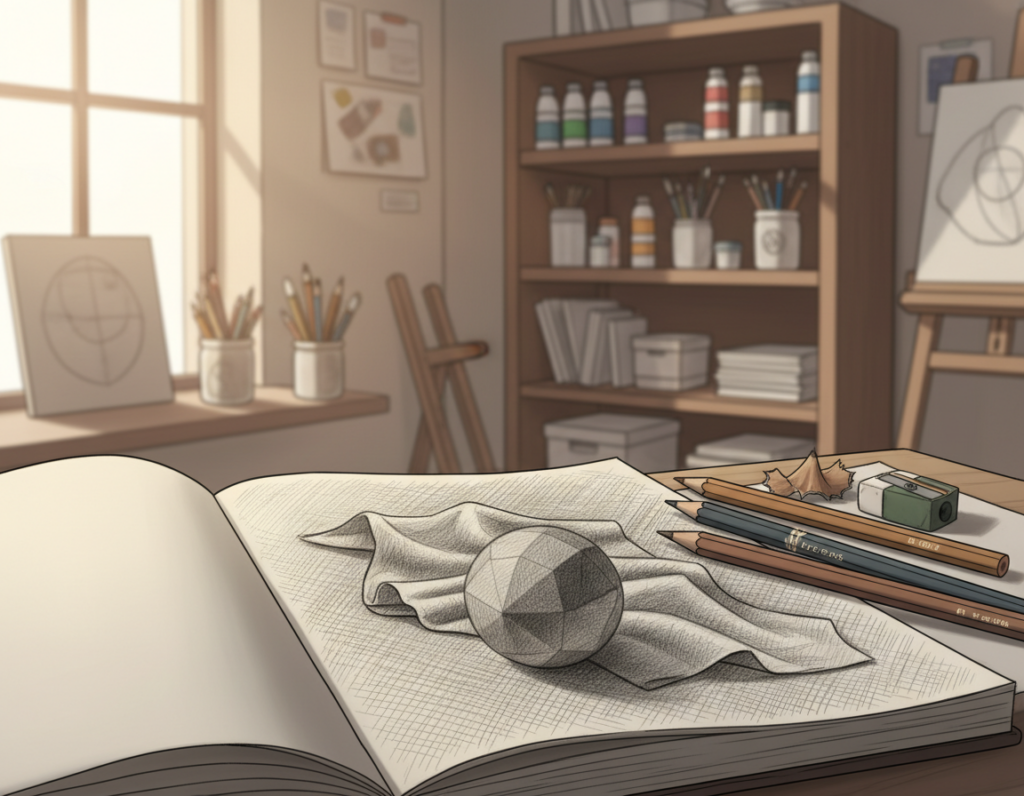
The use of hatching and cross-hatching, combined with blending techniques, allows artists to achieve a wide range of tonal values and textures in their work. By mastering these techniques, artists can create highly detailed and realistic drawings with smooth gradients.
Finger Blending vs. Tool Blending
Blending is a crucial step in achieving smooth gradients, with artists having two primary methods at their disposal: finger blending and tool blending. Each technique has its unique advantages and is suited for different situations.
When Finger Blending Works Best
Finger blending is particularly effective for creating subtle transitions in large areas. The warmth and oils from fingertips can help merge graphite or colored pencil marks, producing a smooth finish. It’s also a more intuitive method, allowing artists to directly feel the texture of the paper and adjust their pressure accordingly.
However, finger blending requires caution. The oils from skin can potentially damage the paper or cause uneven blending if not managed properly. Artists must ensure their fingers are clean and dry before applying them to the artwork.
Advantages of Using Dedicated Blending Tools
Dedicated blending tools, such as blending stumps, tortillons, and makeup sponges, offer precision and control that fingers cannot match. These tools are designed to manipulate graphite or pigment without leaving behind oils or dirt, resulting in cleaner, more consistent blends.
Blending tools are particularly useful for detailed work or when working on smaller, intricate areas where finger blending might be too imprecise. They also allow for a variety of blending effects, from smooth transitions to more textured, nuanced shifts in tone.
Maintaining Clean Blending Surfaces
Regardless of whether an artist chooses finger blending or tool blending, maintaining cleanliness is paramount. For tool blending, this means regularly cleaning the tools to prevent the buildup of graphite or pigment.
Cleaning Blending Stumps and Tools
Blending stumps and tortillons can be cleaned by gently rubbing them against a piece of scrap paper or using a small brush to remove excess graphite. For more thorough cleaning, some artists use a kneaded eraser to pick up graphite residue.
Preventing Oil Transfer from Fingers
To minimize the risk of oil transfer when finger blending, artists should wash their hands thoroughly before starting work and avoid touching their face or hair. Using a barrier, such as a tissue or a glove, between the finger and the paper can also help.
The following table summarizes the key differences between finger blending and tool blending:
| Technique | Advantages | Disadvantages |
|---|---|---|
| Finger Blending | Intuitive, good for large areas, subtle transitions | Risk of oil transfer, less precise |
| Tool Blending | Precise, clean, versatile | May require practice to master, tools can wear out |
Common Blending Mistakes and How to Fix Them
Pencil blending, while seemingly straightforward, is fraught with potential issues that can ruin an otherwise great piece. Artists often encounter problems that can be avoided or fixed with the right techniques and knowledge.
Overworking the Paper Surface
One of the most common mistakes in pencil blending is overworking the paper surface. This can lead to damage that is difficult to repair.
Signs of Paper Damage
Signs that you’ve overworked the paper include visible wear, tears, or a change in the paper’s texture. These issues can compromise the overall quality of your artwork.
Salvaging Overworked Areas
To salvage overworked areas, you can try gently erasing the damaged section and rebuilding it. In some cases, using a fixative can help stabilize the area and prevent further smudging.
Creating Muddy or Uneven Gradients
Muddy or uneven gradients are another common issue. This can occur due to improper layering or using the wrong pencils for the job.
To avoid this, start with light layers and gradually build up to darker tones. Using a range of pencils with different hardness levels can help achieve smoother transitions.
Dealing with Unwanted Graphite Smudges
Unwanted graphite smudges can ruin the crispness of your work. To minimize smudging, rest your hand on a separate piece of paper or use a mahlstick when working on detailed areas.
Fixing Patchy or Streaky Blending
Patchy or streaky blending can be fixed by re-blending the area with a gentle touch. Using a blending stump or tortillon can help smooth out these inconsistencies.
Here’s a summary of common blending mistakes and their fixes in a tabular format:
| Mistake | Cause | Fix |
|---|---|---|
| Overworked Paper | Excessive blending or erasing | Gently erase and rebuild; use fixative |
| Muddy Gradients | Improper layering or wrong pencils | Start with light layers; use varied pencil hardness |
| Graphite Smudges | Resting hand on artwork | Use a mahlstick or rest hand on separate paper |
| Patchy Blending | Inconsistent blending technique | Re-blend with gentle touch; use blending tools |
Advanced Techniques for Complex Gradients
Mastering advanced techniques is crucial for creating complex gradients that add depth and realism to your artwork. These sophisticated methods allow artists to achieve nuanced transitions and detailed shading that elevate their drawings.
Multi-Directional Blending for Realistic Forms
Multi-directional blending involves changing the direction of your blending strokes to follow the contours of the subject. This technique is particularly useful for creating realistic forms and capturing the subtleties of light and shadow.
By varying the direction of your blending, you can create a more dynamic and lifelike representation of your subject. This is especially important when drawing complex subjects with multiple planes and surfaces.
Creating Smooth Gradients on Curved Surfaces
Curved surfaces present a unique challenge when it comes to creating smooth gradients. To achieve a seamless transition on curved surfaces, it’s essential to adjust your blending technique to follow the curvature of the subject.
This may involve using a combination of circular motions and gentle pressure adjustments to ensure an even blend across the surface.
Blending in Small or Highly Detailed Areas
Blending in small or highly detailed areas requires precision and control. Artists must be able to maneuver their blending tools with accuracy to achieve the desired effect without smudging or damaging the surrounding area.
Using Precision Tools for Tight Spaces
Precision tools such as fine blending stumps, cotton swabs, or small makeup sponges are invaluable when working in tight spaces. These tools allow for detailed work and help maintain the integrity of the surrounding artwork.
When using precision tools, it’s crucial to work slowly and carefully to avoid mistakes that can be difficult to correct in small areas.
Combining Multiple Blending Methods
One of the most effective ways to achieve complex gradients is by combining multiple blending methods. This might involve layering different techniques, such as hatching and circular motion blending, to create a rich and nuanced gradient.
By combining techniques, artists can exploit the strengths of each method to achieve a more sophisticated and detailed result.
Conclusion
Mastering pencil blending techniques is crucial for creating smooth gradients in pencil art. By understanding the various methods and tools available, artists can achieve professional-looking results in their artwork.
The techniques discussed, from layering and circular motion blending to burnishing and hatching, offer a range of approaches to creating seamless transitions between tones. Each method has its unique benefits and applications, allowing artists to choose the best technique for their specific needs.
To achieve smooth gradients, it’s essential to select the right pencils, paper, and blending tools. Experimenting with different combinations will help artists develop their skills and style. With practice and patience, artists can master pencil blending techniques and enhance their pencil art.
By applying these techniques and continuing to experiment, artists can take their pencil art to the next level, creating realistic and captivating pieces that showcase their mastery of smooth gradients and pencil blending techniques.