Anúncios
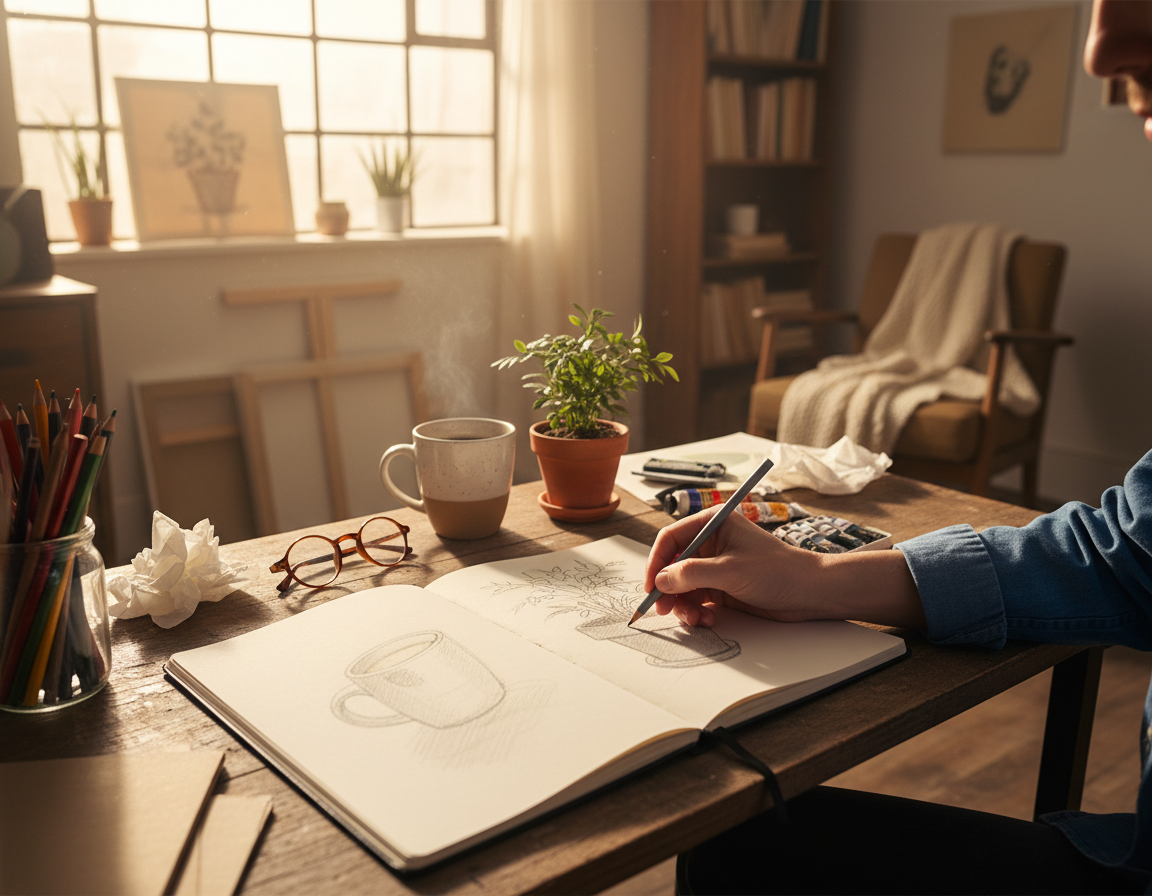
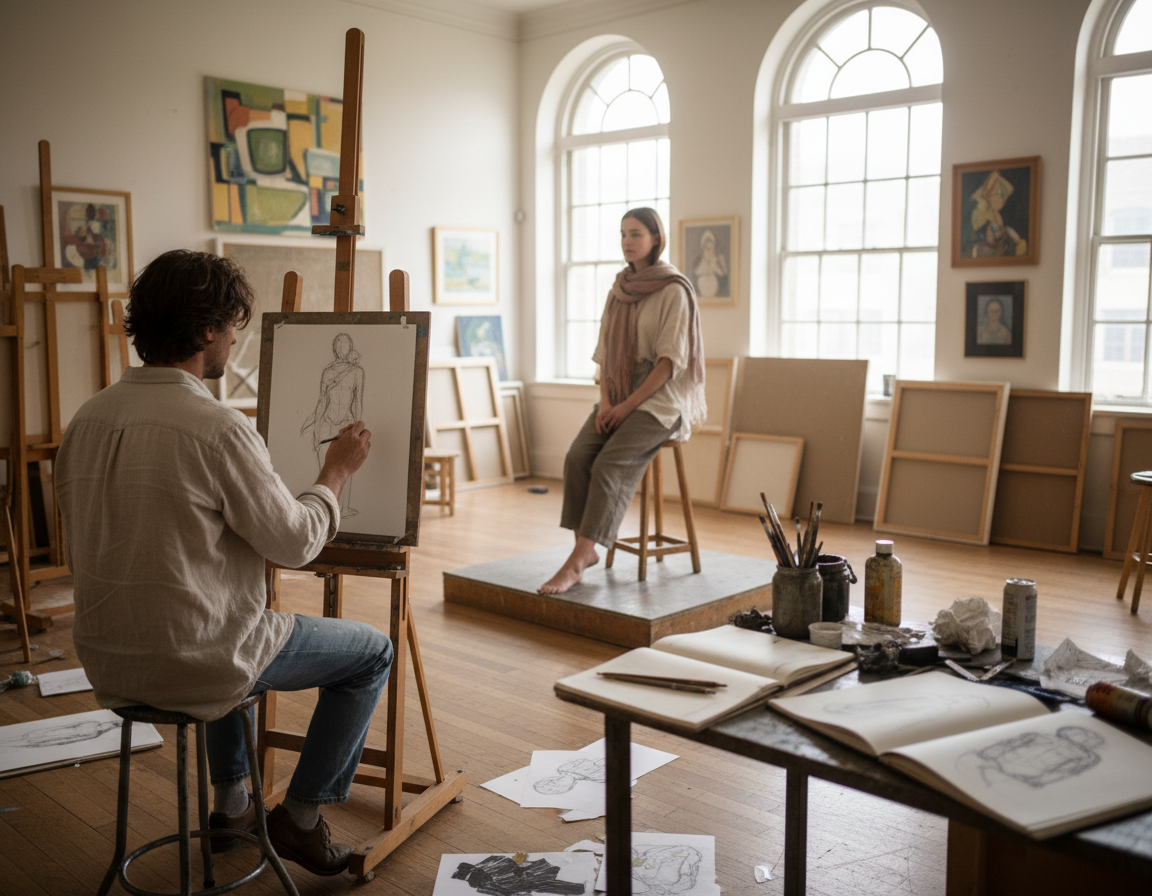
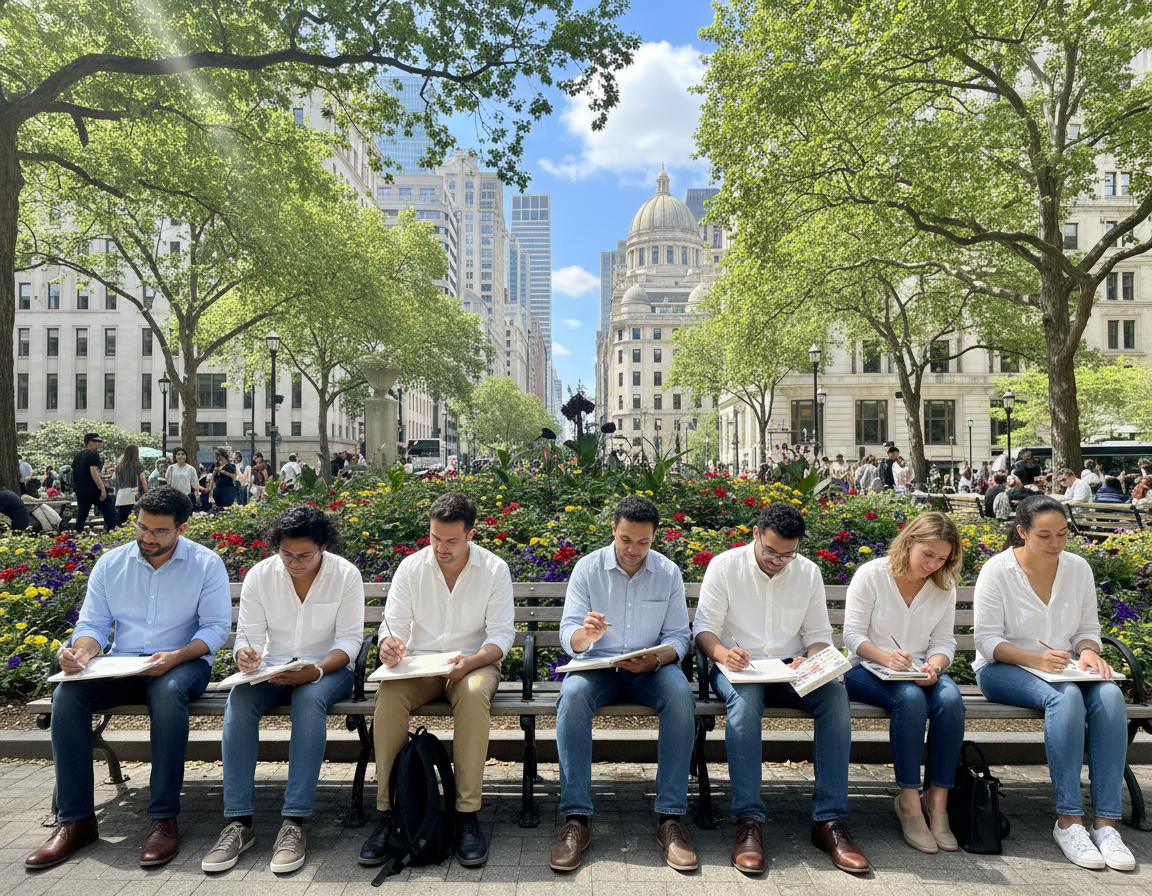
Short, focused sessions give you a clear start and stop, so you can fit drawing into a busy schedule and build momentum fast. A set limit changes how you make decisions on the page, forcing quicker observation and simpler marks.
Timed sketching exercises break practice into repeatable steps. Completing many small drawings reduces friction and turns art into a habit instead of a rare event. This method helps you spot shapes and forms more quickly.
Across the article you will learn materials, warm-ups, a timing ladder from seconds to minutes, accuracy tactics, common pitfalls, and review methods. Expect clear guidance to improve speed and keep structure intact.
Remember: a practice sketch is not a finished piece. The goal is better seeing, clearer shapes, faster execution, and steady confidence through repetition.
Why timed sketches work for improving speed and accuracy
A short, fixed window changes how you begin and finish a drawing. A clear limit reduces delay and makes starting less painful. It forces quick decisions and stops endless fiddling with minor marks.
Anúncios
How a start-and-stop timer makes practice easier to “fit into your schedule”
Using a set time creates a predictable block you can drop into a busy day. Even five minutes becomes useful when it has a firm end. That regular repetition turns drawing from an occasional task into a steady habit.
What you gain over time: confidence, creativity, and better recognition of shapes
Working against a clock trains you to find the biggest forms first and ignore useless detail. Over repeated sessions you build faster proportion checks and clearer marks. This compounding effect improves shape recognition and dexterity.
Practical benefits include stronger focus, low-pressure practice that boosts creative risk-taking, and calmer transitions between activities in daily life.
Anúncios
Classroom and studio results often show improved concentration and wellbeing when short sessions are used regularly. The method lowers stakes, grows confidence, and makes drawing a sustainable part of your routine.
What to gather before you start a timed sketching session
Gathering a few dependable tools before you begin makes short practice sessions smooth and repeatable.
Simple materials: pencil, paper, and a timer
Keep the basics minimal so setup never blocks practice. A pencil, any paper, and a timer (your phone works fine) let you begin in minutes.
A plain page and a comfortable pencil encourage steady repetition across many practice pages. This low-friction setup makes it easy to repeat short draws and improve shape reading and confident lines.
- Essentials: pencil (HB or 2B), a sheet of paper, and a running timer.
- Use a sketchbook or loose page to track progress week to week.
- Keep an eraser for small fixes but avoid over-erasing during a run.
Optional upgrades: sketchbook pages, graphite, pastels, and alternative surfaces
Choose a surface that matches your goal. A toothy sheet changes how marks grab and can create a smokey, atmospheric look with graphite.
For variety, try Bee Paper Company Stipple paper with graphite for precise marks, or black Canson Mi-Tientes pastel paper with NuPastels for broad, fast coverage. Graphite supports careful drawing; pastels let you block values quickly.
| Surface | Best for | Look & speed |
|---|---|---|
| Bee Paper Stipple | Graphite detail | Toothy—smokey/atmospheric; slower, precise |
| Black Canson Mi-Tientes | Pastels & color blocking | Fast coverage; bold value contrasts |
| Standard sketchbook paper | Daily practice | Neutral; repeatable across many pages |
Ergonomics matter: keep your hand relaxed, your table steady, and the page at a comfortable angle. Good posture helps maintain control when you speed up.
Set expectations for a focused, low-pressure practice
Create a calm corner and a clear aim so each brief practice stays low pressure. A quiet spot helps you notice proportions and value relationships faster.
Treat the session as focused learning, not performance. Let the timer be a gentle cue to stay present, not a source of stress.
Creating a quiet, concentrated atmosphere for close seeing
Session rules:
- Start immediately when the time begins.
- Keep moving across the page; avoid getting stuck on one area.
- Do not judge the drawing until the end of the run.
Set one low-stakes intention per session, such as cleaner lines or clearer big-shape placement. This narrows focus and builds specific skills over many short passes.
“Brief, regular practice trains attention as much as technique.”
Think of the routine as a repeatable challenge you can return to, even if you have only a small bit of time before work or class. The real goal is consistency — many finished passes — not a single perfect outcome.
| Rule | Why it helps | Quick tip |
|---|---|---|
| Start immediately | Reduces procrastination and wasted time | Set a short alarm and begin on the first ring |
| Keep moving | Builds overall composition awareness | Scan the whole page every few seconds |
| Avoid mid-run judgment | Maintains calm focus and steady hand | Note one fix to try next time; finish the pass |
Choose the right subject for timed practice
A simple, steady subject helps you focus on big shapes and quick placement. The choice of subject directly affects how much you can capture in short runs. Pick items with clear outlines and strong light to make decisions fast.
Window views for fast observation sketches
Window views stay consistent and let you work through a 10-second, 30-second, 60-second, and 5-minute ladder. Start with big silhouettes, then add a few key edges in the longer pass.
Still life setups using books, fruit, or a vase with flowers
Arrange three simple items — books, fruit, or a vase — so the composition is repeatable. Controlled lighting helps you practice blocking values and seeing major shapes.
Photo references when drawing from life isn’t possible
A stable photo reference supports repetition and comparison across pages. Use one image for a week to measure progress in proportion and line confidence.
- How subject affects speed: simple silhouettes and clear light work best for seconds to a single minute.
- Pick one subject for a week and make multiple drawings on the same page or across pages to compare improvement.
- Quick checklist: clear outline, manageable detail, composition you can block in rapidly.
For more ideas on what to practice, see what drawing exercises should I practice on my.
Warm-up drawing exercises to loosen your hand
A few focused minutes of simple drills loosens the hand and primes your drawing instincts. These warm-ups reduce stiffness and make mark-making feel automatic before you begin timed work.
Line confidence drills: straight lines, curves, and clean starts/stops
Start with 1–2 minutes of controlled lines to reduce wobble. Draw long straight lines, flowing curves, and deliberate start/stop marks.
Focus on rhythm: push each stroke with purpose rather than correcting mid-mark. This builds line confidence and steadiness in the hand.
Basic shapes to train accuracy: boxes, spheres, cylinders, and cones
Next, sketch simple shapes—boxes, spheres, cylinders, cones—quickly and repeatedly. Do one shape at a time, checking basic proportions.
These forms teach you to see three-dimensionally and make faster proportional checks in later drawings.
Quick value blocks to simplify what you see
Finish with 2–3 value blocks: light, mid, and dark. Block masses rapidly to avoid getting lost in mid-tones.
Why it matters: clear values and confident lines translate directly to faster drawing by removing hesitation and making decisions automatic.
- Warm up 1–2 minutes before longer runs.
- Track one skill per session—cleaner lines or clearer shapes—to measure progress over time.
For more warm-up ideas, try this practical warm-up guide: warm-up exercises for drawing.
Timed sketching exercises: a step-by-step timing ladder
A progressive timing ladder helps you train which marks make a drawing read at a glance. Use this sequence in a single session and repeat each step two to four times. The ladder forces fast decisions and reduces the urge to evaluate mid-pass.
Ten-second sketches to stop overthinking and start seeing
In ten seconds capture only the largest silhouette and the main directional angles. Use one or two bold lines to show gesture and flow. No edges, no shading—just the big picture.
Thirty-second sketches to capture the biggest shapes first
Place the biggest shapes and major proportions now. Resist texture and small marks. Think blocks of form and how they sit relative to each other on the page.
One-minute sketches to introduce proportion and placement
Check top/bottom and left/right boundaries quickly. Add a couple of relational marks to test proportion. Keep corrections minimal and decisive.
Five-minute sketches to add structure, values, and key edges
Use the five-minute pass to build structure, block simple values, and define key edges that describe form. Stay aware of the clock and stop at the ring.
Repeat the ladder to learn what each time level needs so your decision-making becomes automatic. Keep all drawings on one page when possible to compare progress at a glance.
How to run a 10-minute, five-times-a-week drawing routine
A short, consistent ten-minute routine, repeated five times weekly, is one of the simplest ways to build steady drawing habits. This plan fits busy schedules and makes steady progress more likely than occasional long sessions.
Where it fits best: Use these ten minutes as a session starter before longer art work or as a transition break between tasks. It wakes your hand, sharpens focus, and lowers the barrier to begin.
Why repetition matters
Doing the same drawing exercise often reveals small, steady improvements in proportion, clarity, and speed. Repetition trains visual memory and dexterity in ways a single long practice cannot.
Benefits: improved concentration, better mark economy, and growing creative confidence that carries into longer pieces.
Adapting the routine
Beginners focus on big shapes and placement. Intermediate artists add quick value blocks and edge control. Advanced artists use the time for composition tests or exploring lighting choices.
Educators can use consistent timing and simple prompts across age groups to measure gains and encourage group challenges.
- Weekly plan: 10 minutes per day, 5 days a week with the same ladder or rotating short drills.
- Placement: start-of-session warm-up or a focused break between tasks.
- End habit: stop exactly when the timer rings, label the time, and move straight to the next drawing or note.
| Level | Focus for 10 minutes | Simple goal |
|---|---|---|
| Beginner | Big shapes, placement, gesture | Block form quickly without detail |
| Intermediate | Proportion checks, fast values | Improve clarity and speed |
| Advanced | Composition, edge control | Refine decisions under time pressure |
Try a longer timed drawing to build stamina and decision-making
A 45-minute session shifts the goal from quick capture to deliberate development. With more minutes you must plan, pace, and choose which areas deserve refinement.
Why the longer block changes priorities
More time encourages structure over detail. Start with composition and proportion, then block big value masses before adding focal edges.
In a demo, two artists used the same photo reference in different ways. One used graphite on Bee Paper Company Stipple and worked precisely. That approach risked not finishing within 45 minutes.
The other artist used NuPastels on black Canson Mi-Tientes and covered the page quickly. Broad strokes let them establish value and color relationships faster than a fine graphite build-up.
What to focus on in a longer drawing
- Composition and placement of the main subject.
- Proportion checks and major value masses, not uniform detail.
- A few strong focal edges to guide the eye.
Track your time use: note minutes spent on setup, measuring, and shading. That makes it easy to adjust pacing in the next session.
“Different artists can produce different outcomes from the same subject; the goal is smarter decisions, not identical results.”
| Approach | Media | Strength in 45 minutes |
|---|---|---|
| Precise build | Graphite on Bee Paper Stipple | Clean line work and fine detail; slower completion |
| Broad value first | NuPastels on black Canson Mi-Tientes | Fast coverage, clear value/color relationships |
| Recommended focus | Any medium | Composition, proportion, big values, key edges |
Practice tip: combine this 45-minute session with shorter ladder work earlier in the week to build both speed and stamina for complex drawings and painting studies.
Pick your medium strategically for the time limit
Match materials to the session length so each mark advances the drawing predictably. Choosing the right medium helps you make clear choices fast and keeps focus on form rather than fiddly detail.
Graphite with pencil: work efficiently by blocking light shapes first, using a few confident lines, and grouping values instead of rendering each surface. Keep your pencil marks light for quick corrections and reserve darker lines for final placement.
Pastels: favor broad strokes and massing. Use large gestures to lay down values and simple color relationships quickly. On black paper, mid-tones and highlights read fast and give instant contrast.
Paper matter: tooth and color change the way marks behave. Bee Paper Stipple grips graphite for fine lines. Black Canson Mi-Tientes helps pastels pop and speeds value placement.
- If you repeatedly run out of time, choose a medium that supports broader strokes and faster value placement.
- Adapt technique: you cannot approach every medium the same way.
- Decide before you start: tight media for precision, broad media for bold decisions.
| Medium | Best for | Quick strategy |
|---|---|---|
| Graphite (pencil) | Precise drawing, line work | Light block-in, few strong lines, grouped values |
| Pastels | Fast value/color massing | Large strokes, build mid-tones, strong highlights on colored paper |
| Standard sketch paper | Everyday practice | Neutral response; choose approach by session length |
Accuracy tactics for timed sketching (without slowing down)
Begin by mapping big masses, then add only the marks that increase readability. Block the subject’s envelope first so proportions lock in fast.
Start with big shapes, then refine—avoid detail-first habits
Place the largest shapes and major intersections quickly. Use one confident line to show each main edge. Refine only where it makes the whole read better.
Use simple measuring: angles, alignment, and negative space
Spend 30–90 seconds checking angles and alignment. Compare one edge to another. Look at negative spaces to verify gaps and relative sizes.
Keep forms readable with a limited set of lines and values
Limit your line count to force clear choices. Group values into 2–4 masses so light and dark shapes read at a glance.
- Big-to-small workflow: block large shapes, then refine only helpful marks.
- Quick checks: angle, alignment, negative space within a minute.
- Fewer lines = clearer drawing; fewer stray marks means better read.
- Group values into simple masses to keep forms legible under time pressure.
Practical tip: keep your eyes on the subject more than the page. Frequent envelope checks stop one-corner fixes and keep proportion steady.
Common mistakes that steal minutes—and how to fix them
A little awareness of common pitfalls saves minutes and keeps your hand moving.
Erasing too much: wiping lines away freezes momentum. Instead, add one confident line to correct placement and keep drawing. This preserves rhythm and helps you see the change immediately.
Getting stuck on one area: focusing on a detail breaks proportion across the whole page. Use a whole-drawing pass: block the main shapes, then return to refine focal spots.
Judging mid-run: evaluating work while the clock is running steals time and confidence. Finish the pass, then review. Emotional reactions make you lose minutes and useful practice.
- Set micro-checkpoints: block-in by 20% of the session and establish major values by 70% of the time.
- Correct with clean, bold marks rather than erasing repeatedly.
- Scan the full page every few seconds to keep proportions steady.
Remember: a rough sketch is valuable. Allow a bit of imperfection and treat each short drawing as progress toward clearer decisions and steadier lines.
Reflect after each session to lock in progress
Spend a couple of focused minutes right after each run to note one clear gain and one targeted fix. That short habit turns isolated attempts into steady improvement and keeps your practice intentional.
Two-minute review: what improved, what felt hard, what to try next
Two minutes is enough to capture useful feedback without slowing momentum.
- Note what improved and what felt difficult.
- Write one specific adjustment to try on the next drawing.
- Label the page with the time limit and date so comparisons are easy.
- Prompts to answer: which drawing reads best, where did you lose minutes, and which medium felt fastest?
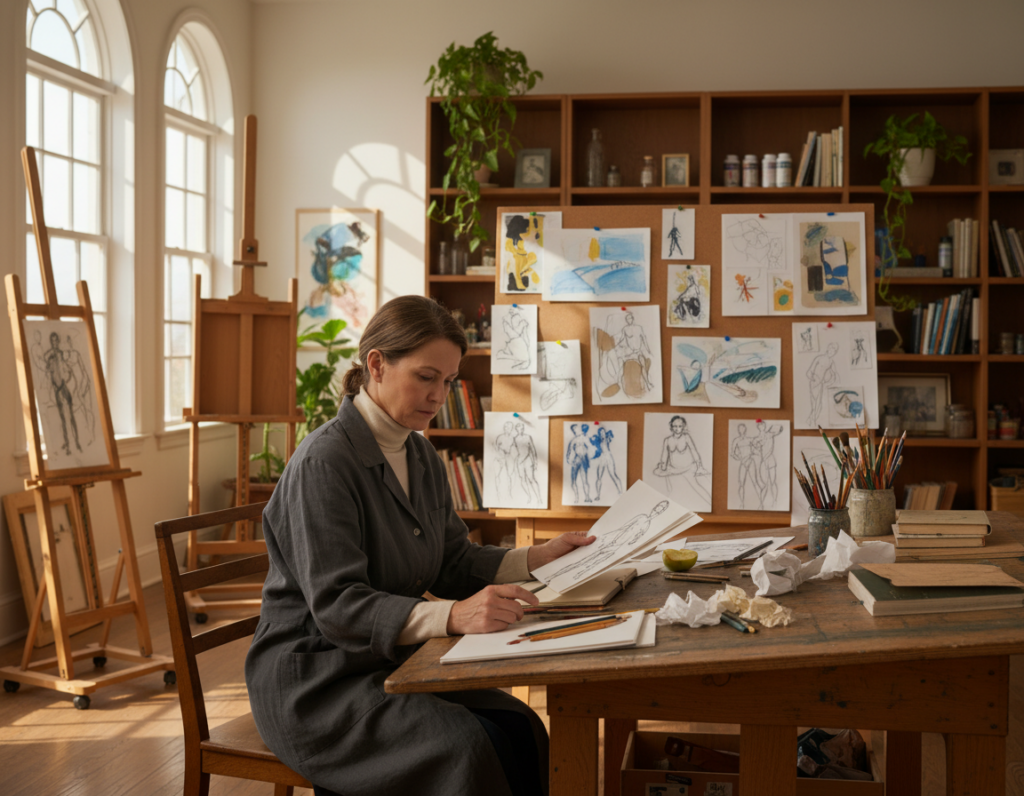
End-of-week revisit: repeat an exercise to compare drawings and consolidate gains
At the end of the week, repeat the same exercise and subject to measure changes.
- Compare proportions, line confidence, and value control across pages.
- If you practice in a group, do a brief peer viewing—walk around and note differences.
- Reflection turns repetition into real skill-building, not just looping.
“Small, consistent review makes each session count more than the sum of its minutes.”
Conclusion
Make each brief session a focused experiment, and you’ll train faster decisions without pressure.
Use timed sketching exercises as a simple method: ladder your runs from seconds to minutes and pair them with a 10-minutes, five-times-a-week plan to build steady progress.
Choose subjects and media that fit the time limit — graphite for precise work, pastels for broad value — so every pass advances the drawing.
Consistency beats occasional marathons. Many small sketches grow recognition, creativity, and confidence faster than rare long sessions.
Keep tools handy: a timer, paper, and a pencil or pastel in a dedicated spot. Finish the pass, reflect briefly, then return tomorrow.