Anúncios
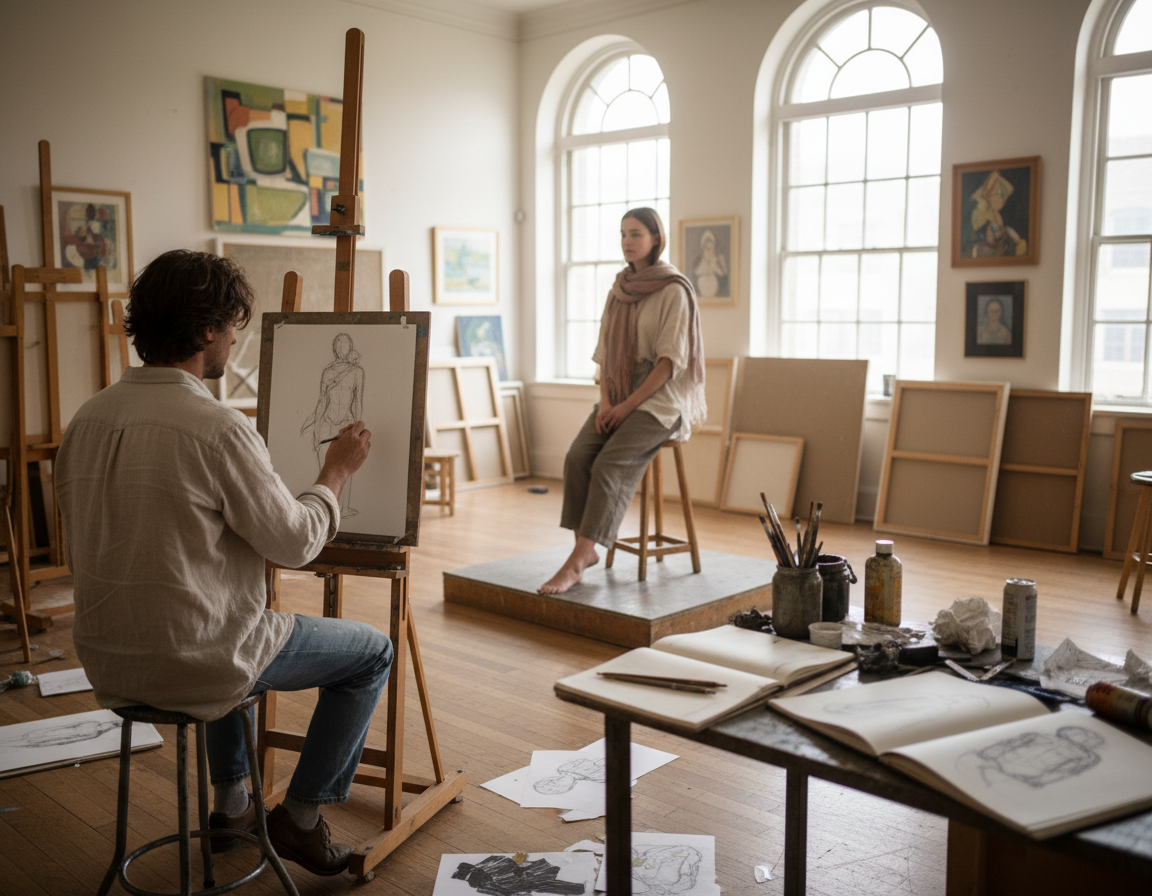
Start small, stay curious. This guide frames a sketchbook drawing practice as a low-pressure routine you can keep for years. Treat it as a safe lab for ideas, not a portfolio to impress anyone.
Think of the habit as repeatable and low-friction. The goal is to make art feel normal each day, not a rare event that needs perfect setup.
Expect messy pages. They are tools for learning: quick notes, experiments, and small wins. Build consistency first, then add skill work like observation, line confidence, and composition over time.
Adopt a “forever habit” mindset to reduce pressure. Track simple milestones—pages filled per week—to see momentum. Many people notice fast gains once habits click: a few spreads can grow into dozens.
In this guide you’ll find steps to set up supplies, design a routine, win on low-energy days, choose subjects, and speed growth with constraints. If you are an artist at the beginning or restarting, the fastest way to get started is to keep it tiny and repeatable.
Anúncios
Why a Sketchbook Habit Works for Skill, Creativity, and Confidence
A small, regular habit turns pages into a safe lab for new ideas. When the goal is learning, not display, you can try risky marks and laugh at a failed experiment.
A no-pressure page separates practice from finished pieces. That gap makes it easier to take chances and learn faster from mistakes. Over time, those quick tries become data you can use.
A place to experiment and make mistakes
Try new brushes, copy a bold stroke, or test a color mix. The page’s job is to teach, not impress. This approach builds confidence because errors are useful, not shameful.
Anúncios
How daily sessions grow skills and style
Short, frequent work trains hand-eye coordination and proportion sense. Your brain begins to notice shapes, edges, and relationships faster.
- Creativity increases with repetition: warm-ups often spark bigger ideas mid-session.
- Style emerges over years: repeated choices in line, tone, and subject form a recognizable voice.
- Confidence follows consistency: showing up daily teaches you to create even on low-energy days.
Messy pages are progress. They show you where to focus next. For many artists, breakthroughs come from playful experiments, not polished results.
Set Up Your Sketchbook and Supplies So Starting Feels Easy
Make your materials easy to reach and simple to use so you’ll actually open the book. Choose a format you will carry and use—spiral pads, kraft paper, graph sheets, or even clipped scraps work fine. Permission to use imperfect paper removes the pressure to wait for a “perfect” book.
Pick a book you’ll actually use
Cheap spiral-bound options often help. Low-quality paper can be a feature: it invites loose lines and reduces fear of mistakes.
Choose simple tools
Starter kit: one pencil and one ink option (Sharpie or brush pen). That combo reduces decision fatigue and gets you drawing fast.
Let your kit evolve
Keep room to add watercolor later. Try a watercolor-capable page once the habit is steady to test washes and color mixes without pressure.
Make a home for your supplies
Place the book and tools where you already sit—kitchen table or beside a chair. Visibility beats price: accessible tools help people start with zero friction.
Design a Routine You Can Repeat Every Day (Even When You’re Busy)
Carve out a tiny, guaranteed block of minutes each day so the habit survives busy weeks. Pick a realistic target: 5, 10, or 15 minutes is fine. Short time slots make it easy to get started and keep going.
Use a timer—phone alarm, kitchen timer, or hourglass—to create a clear start and stop. That boundary makes a session feel contained and less daunting.
Choose a consistent place
Decide on one spot so you skip the setup decision. Kitchen table, a favorite chair by the window, a coffee shop, or a park bench works. Consistency reduces friction and helps the routine stick.
Build a small ritual
Simple cues help your brain switch modes. Make tea, play one playlist, light a candle, or pack a tiny kit the night before. These tiny rewards make the session feel earned.
Steal back time
Swap a short block of low-value screen time—scrolling, a single episode, or idle browsing—for a focused session. Treat that slot as an appointment you protect each day.
- Pick minutes you can keep: start small so the routine survives stress.
- Timer accountability: a set time helps you begin and stop without guilt.
- Doodle while distracted: sketch during phone calls to lower inhibition and get more reps.
- Plan tonight: decide your time and place before bed to get started faster tomorrow.
Make Your Sketchbook Drawing Practice Stick With Small, Consistent Wins
Small, deliberate wins make the habit stick more than one perfect session ever will. Aim to clear a single page with quick marks instead of chasing a masterpiece. That visible progress reduces fear and keeps you coming back.
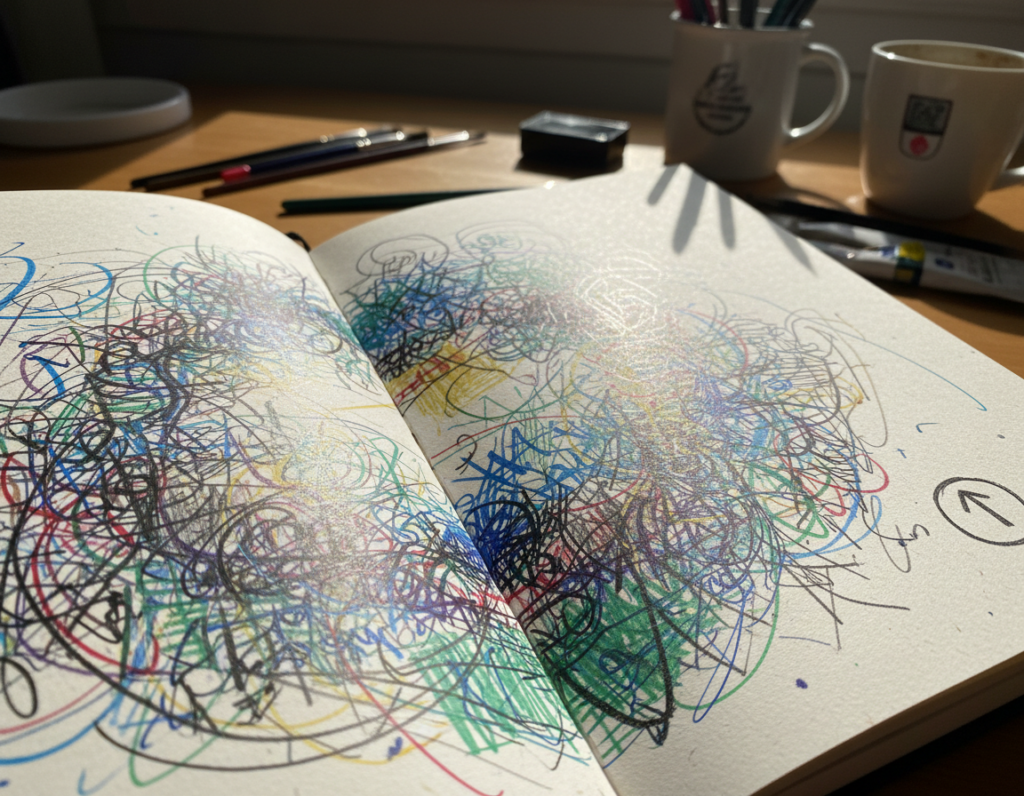
Start with a warm-up mark-making page
Begin each session with a short warm-up of straight lines, curves, hatching, and circles. Do this for two minutes to loosen the hand and beat the blank page.
These simple lines act as an exercise to get momentum. They often spark an idea for the rest of the session.
Use “show up anyway” rules for low-energy nights
When energy is low, set a 10–15 minute timer and fill a page with small repeated shapes or quick studies. Micro-sessions at the end of the day—one tiny sketch or a few confident lines—count.
“A single imperfect page is proof you kept the loop alive.”
Track small wins: days practiced, pages filled, or short exercises completed. This data keeps the goal realistic and shrinks the risk of dropping the habit for good.
What to Draw When You Don’t Know What to Draw
When you’re stuck, pick one small subject and fill a page fast to keep momentum. This fill-the-page method favors repetition over perfection and removes the pressure to create a finished post.
Try a concrete prompt: fill a page with many eyes, mixing styles—realistic, manga, animal—to train shapes and proportions. Speed matters more than detail here; aim for variety, not photo realism.
To get a subject “in your fingers,” pick one thing—hands, shoes, a mug—and draw it repeatedly from life. Rotate the object, redraw it from new angles, then sketch it from memory. That repetition builds muscle memory and observation.
Repeat the same place or theme (your kitchen view, the street outside) across days to notice new details. Drawing people or moving subjects forces simplification and sharpens fast observation.
Low on energy? Go abstract: fill a page with dots, circles, parallel lines, or tangles. Shade or color negative spaces to keep momentum without overthinking form.
- Quick references: use a photo prompt or a Pinterest outfit image for instant ideas.
- Mini compositions: postcard-sized sketches reduce pressure and make easy posts later.
For more prompts, consult a quick prompt list like the one at 101 sketch ideas to get unstuck fast.
Build Skills Faster With Looser Sketching, Variety, and Intentional Constraints
When you loosen the rules, your hand learns shape and rhythm faster than it does under pressure. Quick, relaxed marks let you explore form without freezing on a single result.
Sketching vs. drawing
Sketching uses fast, flowing lines to test ideas and get high reps. Drawing slows down for accuracy. Both matter, but loose work fills pages and builds skills more quickly.
Rotate tools and test media
Change tools each session—pencil, ballpoint, brush pen—to stay playful and adaptable. Once the habit holds, run a single watercolor test page to learn quick washes and color mixing.
Scale for more reps
Draw smaller studies so you can fit many on a sheet. Set a 10–15 minute timer and aim for dozens of tiny heads or eyes instead of one large piece.
Mistakes as feedback
Note short margin comments: what worked (line weight, angle) and what needs more reps (profiles, folds). Constraints—time, tool, or subject—spark creativity and faster gains over years.
| Approach | Time | Goal | Result |
|---|---|---|---|
| Loose sketches | 10–15 min | High reps | More confident lines |
| Tool rotation | One session each | Adaptability | Broader comfort with tools |
| Small studies | Timed sets | Repetition | Faster skill gains |
| Margin notes | Post-session | Feedback | Clear next steps |
For guided assignments that fit these constraints, try the curated list at daily sketch assignments.
Conclusion
Finish by choosing one tiny action you can do right now to turn intent into habit. Pick a visible sketchbook, grab one simple tool, set a ten-minute timer, and fill a page. Small steps beat perfect plans.
This guide showed a clear framework: make starting easy with reachable tools, keep sessions tiny and timed, and repeat prompts or page-filling exercises. Consistent, low-pressure work builds art skills and creative confidence because repetition compounds.
Messy pages are productive pages. Treat the book as a lab for experiments and mistakes. Track progress by pages filled and weekly consistency, not by comparing single pieces.
Keep it simple, keep it daily, and let your drawing and practice evolve as you keep making art with curiosity.