Anúncios
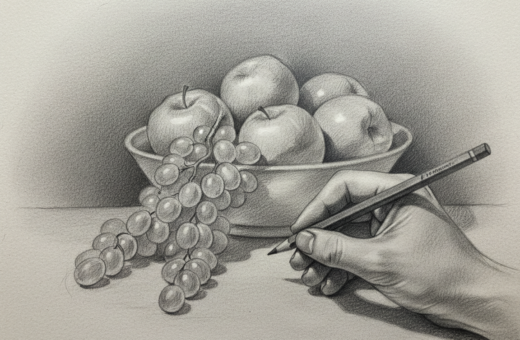
Creating realistic depth in art requires more than just a steady hand. It involves understanding how to build tonal value through many light touches. This method is the true foundation of layered pencil shading.
Many artists struggle with flat looks when they rush the creative process. By using very light pressure, you can slowly create a professional and smooth appearance. This path prevents the graphite from becoming too shiny or difficult to change.
Learning this skill changes how you see light and shadow on any complex object. It gives you the precision needed for fine details in your drawings. These refined methods ensure a better result every time you work on a project.
Using several passes lets you fix mistakes easily if the dark levels get too intense. It also keeps the paper surface ready for additional work later on. You will find that this deliberate pace leads to superior quality in your finished pieces.
Understanding the Fundamentals of Pencil Layering
To achieve superior shading results, it’s crucial to grasp the basics of pencil layering. Layering pencils is a sophisticated technique that allows artists to achieve a wide range of tonal values and textures in their work. Unlike single-pass shading, layering involves building up multiple layers of graphite to create depth and dimension.
Anúncios
The process of layering is distinct and offers more control over the final outcome. By understanding how to effectively layer pencils, artists can enhance their drawings with nuanced shading and detailed textures.
What Makes Layering Different from Single-Pass Shading
Single-pass shading involves applying a single layer of graphite to achieve the desired shading. In contrast, layering pencils involves multiple applications, allowing for greater precision and flexibility. This multi-layer approach enables artists to gradually build up shading, making it easier to achieve smooth transitions between different tonal values.
Layering also allows for corrections and adjustments to be made at various stages, reducing the risk of over-shading or creating unwanted dark spots. This iterative process is fundamental to achieving high-quality, realistic shading.
Anúncios
The Science Behind Building Up Graphite Layers
The effectiveness of graphite layering lies in how graphite interacts with the paper. When graphite is applied to paper, it fills in the microscopic grooves on the paper’s surface. Each layer of graphite builds upon the previous one, gradually increasing the density of the shading.
The science behind this process involves understanding how graphite particles adhere to the paper and how different pressures and stroke directions can affect the layering outcome. By mastering these elements, artists can achieve a wide range of shading effects, from subtle transitions to deep, rich blacks.
Essential Materials for Layered Pencil Shading
To achieve successful layered pencil shading, it’s crucial to start with the right materials. The quality and appropriateness of these materials can significantly impact the final result, making it essential to understand what to look for.
Selecting the Right Pencil Grades is a fundamental step in layered pencil shading. Pencils come in a range of grades, from very hard (9H) to very soft (9B). Harder pencils (H grades) are used for lighter shades and details, while softer pencils (B grades) are ideal for darker shades and creating rich textures.
Selecting the Right Pencil Grades
The range of pencil grades allows artists to achieve a wide spectrum of tonal values. For layered shading, it’s beneficial to have a variety of pencils, including hard (H, 2H, 4H), medium (HB), and soft (2B, 4B, 6B, 8B) grades. This range enables smooth transitions between different shades.
“A good set of pencils is like an extension of the artist’s hand,” says renowned artist, John Smith. “Having the right grades at your disposal can make all the difference in achieving the desired depth and dimension in your work.”
Choosing Appropriate Paper Texture and Weight
The paper texture for shading plays a critical role in how well the graphite adheres and blends. Papers with a slight texture, often referred to as “tooth,” are ideal for pencil shading as they allow for better graphite adhesion and more controlled layering.
When it comes to paper weight, heavier papers (measured in gsm) are more durable and less prone to buckling or tearing when multiple layers are applied. A paper weight of at least 80 gsm is recommended for layered pencil shading.
Additional Tools for Effective Layering
Besides pencils and paper, several additional tools can enhance the layered pencil shading process. These include blending stumps, tortillons, and erasers. Blending stumps and tortillons are used to smooth out and blend graphite layers, creating subtle transitions between shades.
Erasers, particularly kneaded erasers, are invaluable for correcting mistakes and creating highlights by removing graphite from specific areas.
- Blending stumps for smoothing graphite
- Tortillons for detailed blending
- Kneaded erasers for correcting and highlighting
By carefully selecting the right pencil grades, paper texture, and additional tools, artists can significantly improve their layered pencil shading techniques, achieving richer, more nuanced artworks.
Preparing Your Workspace and Materials
Before diving into layered pencil shading, it’s essential to prepare your workspace and materials for optimal results. A well-organized workspace not only enhances your creativity but also streamlines your workflow, allowing you to focus on the intricacies of layering pencils and shading exercises.
Setting Up Proper Lighting Conditions
Proper lighting is crucial for accurately assessing the shading and layering effects in your pencil shading techniques. Natural light is ideal, but if you’re working in the evening or in a room without sufficient natural light, invest in a good quality lamp that provides a daylight spectrum.
Key Considerations for Lighting:
- Position your light source to minimize glare on your paper.
- Avoid harsh shadows that can distort your perception of the shading.
- Ensure the light is bright enough to illuminate your work without straining your eyes.
Organizing Your Pencil Range
Having your pencils organized is vital for efficient layering. This involves selecting the right pencil grades for your work and keeping them within easy reach.
Pencil Organization Tips:
- Sort your pencils by grade (e.g., all ‘H’ pencils together, followed by ‘B’ pencils).
- Use a pencil case or container that keeps your pencils clean and undamaged.
- Keep your most frequently used pencils easily accessible.
A well-organized workspace and the right lighting conditions can significantly improve your pencil shading techniques. Here’s a quick comparison of different pencil organization methods:
| Organization Method | Advantages | Disadvantages |
|---|---|---|
| By Grade | EASY TO FIND SPECIFIC PENCILS, LOGICAL ORDER | MAY REQUIRE MULTIPLE CONTAINERS |
| By Frequency of Use | QUICK ACCESS TO MOST USED PENCILS | LESS LOGICAL FOR BEGINNERS, MAY LEAD TO CONFUSION |
| Mixed | COMBINES BENEFITS OF OTHER METHODS | REQUIRES MORE PLANNING AND ADJUSTMENT |
Mastering Layered Pencil Shading Techniques
Effective layered pencil shading requires a combination of the right materials and techniques. To achieve professional-looking results in your drawings, it’s essential to understand the principles behind layering graphite. This section will delve into the key techniques that will help you master layered pencil shading.
The Light-to-Dark Layering Principle
The light-to-dark layering principle is fundamental to achieving smooth transitions in your shading. Starting with lighter shades and gradually building up to darker ones allows for more control over the final result. This approach helps prevent the paper from becoming overworked or damaged by heavy pressure too early in the process. For more insights on shading and light, you can refer to this resource on understanding light and shadow in drawings.
Controlling Pressure Throughout Layers
Controlling the pressure applied while shading is crucial for achieving the desired depth and texture. Varying the pressure allows artists to create a range of tonal values, from very light to very dark. It’s essential to practice controlling your pencil pressure to achieve consistent results across different layers.
Tips for Pressure Control:
- Start with a light touch for the initial layers.
- Gradually increase pressure as you build up layers.
- Be mindful of the pencil grade you’re using, as softer pencils require less pressure.
Directional Stroke Patterns for Each Layer
The direction of your strokes can significantly impact the texture and appearance of your shading. Using consistent directional stroke patterns for each layer can help achieve a more uniform look. Experimenting with different stroke directions can also add texture and interest to your work.
By mastering these techniques—light-to-dark layering, pressure control, and directional stroke patterns—you’ll be well on your way to creating rich, detailed shading in your drawings. Practice is key, so be sure to dedicate time to honing these skills.
Building Your First Layer Foundation
A well-executed first layer is the cornerstone of effective layering techniques. It provides the base upon which subsequent layers are built, influencing the overall quality and depth of the shading. To achieve a strong foundation, it’s essential to understand the role of hard pencils, the importance of even tone distribution, and common pitfalls to avoid.
Starting with Hard Pencils for Base Layers
When beginning your layered pencil shading, start with hard pencils (H or 2H) to create your base layer. Hard pencils produce lighter, more controlled marks that are ideal for establishing the initial tone and detail without overpowering the paper. This approach allows for gradual build-up and refinement in subsequent layers.
Using hard pencils for the base layer offers several advantages. It helps prevent the paper from becoming too dark too quickly and reduces the risk of overworking the surface. Moreover, hard pencils are less likely to smudge or create unwanted dark spots, providing a cleaner starting point for further layering.
Establishing Even Tone Distribution
Achieving an even tone distribution in your first layer is critical for creating a cohesive and balanced shading. To accomplish this, maintain consistent pressure and stroke direction. Varying the pressure or direction can lead to unevenness that may be difficult to correct in later layers.
To ensure evenness, it’s helpful to work in sections, gradually building up the tone across the entire area. This methodical approach allows you to monitor and adjust the tone as needed, ensuring a uniform base layer that supports the subsequent shading.
Avoiding Common First-Layer Mistakes
Several common mistakes can compromise the quality of your first layer. These include applying too much pressure, which can damage the paper or create unwanted dark areas, and failing to maintain consistent stroke direction, leading to uneven tone distribution.
To avoid these issues, work with a light touch and maintain a consistent stroke direction. Additionally, regularly step back to assess your work, making adjustments as necessary to ensure the tone remains even and controlled.
By starting with hard pencils, establishing an even tone, and avoiding common mistakes, you can create a strong foundation for your layered pencil shading. This careful approach sets the stage for successful subsequent layers, ultimately enhancing the depth and quality of your artwork.
Adding Intermediate Layers for Depth
As you progress in your layered pencil shading journey, adding intermediate layers becomes crucial for achieving depth and complexity in your artwork. Intermediate layers are where the foundation laid by the initial layer is built upon, allowing for a more nuanced and detailed representation of your subject.
The key to successful intermediate layers lies in understanding how to transition smoothly between different pencil grades, creating smooth tonal gradations, and knowing when to add the next layer. This section will delve into these critical aspects, providing you with the knowledge to enhance your layered pencil shading skills.
Transitioning Between Pencil Grades
Transitioning between pencil grades is a delicate process that requires a thoughtful approach. It involves moving from one pencil grade to another to achieve the desired tonal range and depth. For instance, you might start with a harder pencil (like H or 2H) for the base layer and then transition to softer pencils (like B or 2B) for subsequent layers.
To transition effectively, it’s essential to understand the characteristics of each pencil grade and how they interact with the paper. A general rule of thumb is to progress from harder to softer pencils, allowing for a gradual build-up of graphite.
| Pencil Grade | Characteristics | Usage in Layering |
|---|---|---|
| Hard (H, 2H) | Light tone, fine details | Initial layers, base tone |
| Medium (HB) | Balanced tone, versatile | Middle layers, transitioning |
| Soft (B, 2B) | Dark tone, expressive shading | Later layers, deep shadows |
Creating Smooth Tonal Gradations
Creating smooth tonal gradations is vital for achieving a natural and cohesive look in your artwork. This involves blending the graphite layers to create a seamless transition between different tones. Techniques such as hatching and cross-hatching can be employed to build up layers gradually.
Smooth gradations can be achieved by layering graphite in a way that allows each layer to blend with the next, creating a continuous range of tones. This not only enhances the overall appearance of your drawing but also adds depth and dimensionality.
When to Add the Next Layer
Determining when to add the next layer is a critical decision in the layered pencil shading process. It’s essential to assess the current state of your drawing and decide whether the next layer is necessary to achieve your desired outcome.
A good rule of thumb is to add the next layer when you feel that the current layer has reached its maximum potential in terms of tone and texture. This allows you to build upon the existing layer and further refine your drawing.
Finishing Layers and Final Details
To elevate your pencil shading from good to exceptional, mastering the final layers is essential. The finishing layers are crucial as they add depth, contrast, and detail to your artwork, bringing it to life. This stage requires patience and a gentle touch, as you’re building upon the foundation established in the previous layers.
Using Soft Pencils for Rich Darks
Soft pencils, typically those with a ‘B’ grading (e.g., 2B, 4B, 6B), are instrumental in creating rich, dark tones that add depth to your shading. When using soft pencils, it’s essential to apply gentle pressure to avoid over-darkening the area too quickly. Start with a softer pencil like 2B and gradually move to softer grades as needed.
Tip: To achieve smooth transitions, blend the edges of the shaded areas with a blending stump or tortillon before adding more layers.
Enhancing Contrast in Final Layers
Contrast is what makes a drawing pop. In the final layers, enhancing contrast involves balancing light and dark areas. To achieve this, identify the areas that need the most contrast and use your softest pencils to deepen the shadows. Conversely, preserve the highlights by avoiding over-shading in those areas.
“The art of shading is not just about creating darkness, but also about preserving the light.”
To effectively enhance contrast, consider the following steps:
- Identify key areas for contrast enhancement.
- Use soft pencils to deepen shadows.
- Preserve highlights by gentle shading around them.
Preserving Highlights and Light Areas
Preserving the highlights and light areas is just as important as creating deep shadows. To maintain these areas, avoid applying too much pressure or shading too heavily. If necessary, use an eraser to gently lift off graphite and restore highlights.
| Technique | Purpose | Tool |
|---|---|---|
| Gentle Shading | Preserve Highlights | Hard Pencils (H, 2H) |
| Deepening Shadows | Enhance Contrast | Soft Pencils (2B, 4B) |
| Restoring Highlights | Correct Mistakes | Eraser |
By mastering the final layers and paying attention to the details, you can significantly improve your pencil shading techniques. Practice shading exercises and layering pencils to become more comfortable with these techniques.
Blending Techniques Between Layers
To create smooth, professional-looking shading, mastering blending techniques is essential. Blending between layers is a critical step in achieving realistic and visually appealing pencil shading. It allows artists to merge different graphite layers, creating a cohesive and nuanced transition between shades.
Using Blending Stumps Effectively
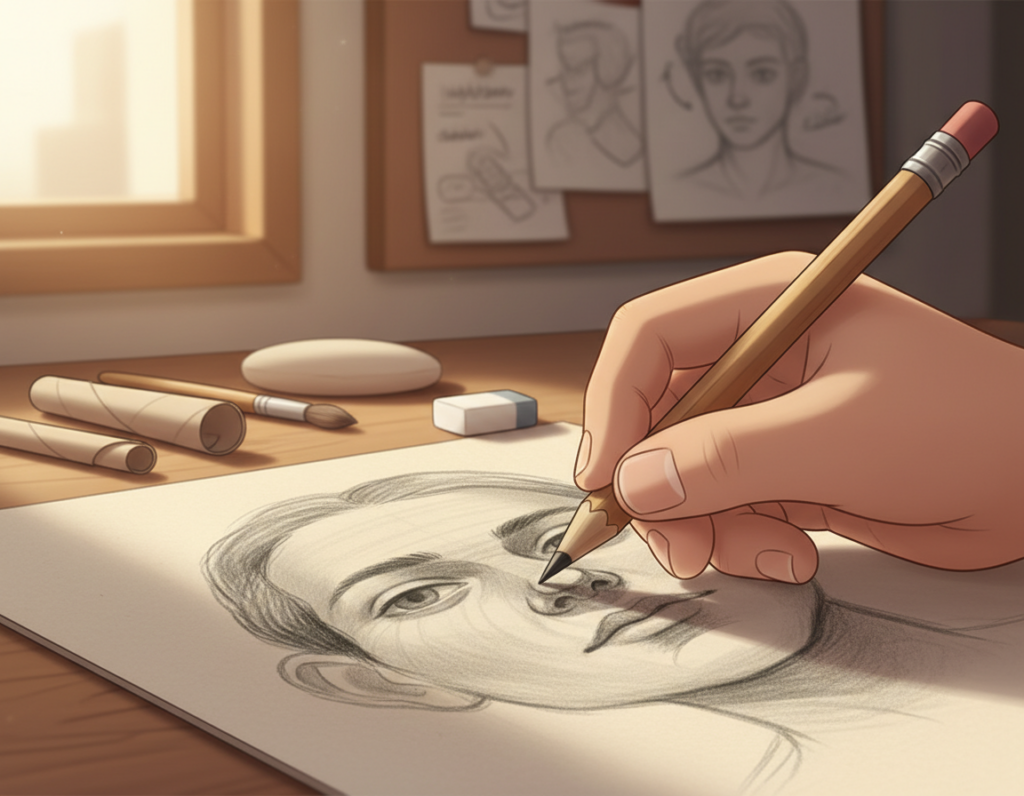
Blending stumps are invaluable tools for artists looking to smooth out graphite marks and achieve subtle transitions between different shading layers. These tightly rolled paper stumps are used to blend, smooth, and merge graphite or charcoal on paper. To use a blending stump effectively, gently rub it over the area you wish to blend, applying gentle to moderate pressure. This technique is particularly useful for creating detailed, realistic shading in smaller areas.
Finger Blending vs. Tool Blending
Both finger blending and tool blending have their unique advantages. Finger blending, using your fingertips to smooth out graphite, allows for a high level of control and can create very subtle transitions between shades. However, it can be messy and may leave behind oils from your skin on the paper. On the other hand, tool blending, using instruments like blending stumps or tortillon, offers precision and cleanliness. The choice between the two often depends on the specific requirements of the artwork and personal preference.
When to Blend and When to Leave Strokes Visible
The decision to blend or leave strokes visible is a creative choice that depends on the desired effect of the artwork. For realistic shading, blending is often necessary to achieve a smooth, lifelike appearance. However, visible strokes can add texture and character to a piece, making it more expressive and engaging. Understanding when to apply each technique is crucial for achieving the intended outcome.
| Technique | Best For | Control Level | Mess Level |
|---|---|---|---|
| Finger Blending | Subtle transitions | High | Medium |
| Blending Stumps | Detailed work, precision | Medium | Low |
| Tortillon | Broad areas, smoothening | Low | Low |
Common Layering Mistakes and How to Fix Them
Layering pencils can be a nuanced art, and even experienced artists can fall into common pitfalls. Understanding these mistakes and how to correct them is crucial for achieving smooth, even shading in your artwork.
Overworking the Paper Surface
One of the most common mistakes artists make when layering pencils is overworking the paper surface. This can lead to a rough, uneven texture that is difficult to correct. To avoid this, start with light layers and gradually build up to darker tones.
Tip: Regularly inspect your work under different lighting conditions to catch any areas where you may be overworking the paper.
Pressing Too Hard Too Soon
Applying too much pressure too early in the layering process can cause the graphite to become too dense, leading to an uneven appearance. It’s essential to start with gentle strokes and increase pressure gradually as needed.
“The key to successful layering is patience,” says renowned artist Jane Doe. “Rushing the process can lead to mistakes that are difficult to fix.”
Inconsistent Stroke Direction
Inconsistent stroke direction can result in a patchy, uneven appearance. To avoid this, maintain a consistent stroke direction throughout each layer.
If you notice unevenness in your layers, there are several techniques you can use to correct it. One approach is to use a blending stump to smooth out the area. Alternatively, you can use a soft eraser to remove some of the graphite and start again.
To prevent uneven layers in the future, practice pencil shading techniques regularly, and consider incorporating shading exercises into your routine to improve your skills.
Advanced Layering Strategies
Advanced layering techniques can significantly enhance the depth and dimensionality of your pencil artwork. By incorporating complex strategies into your shading routine, you can achieve more nuanced and detailed results.
To expand your skillset, it’s essential to explore various advanced techniques. These include cross-hatching between layers, creating texture through layered strokes, and adapting layering for different subjects.
Cross-Hatching Between Layers
Cross-hatching is a powerful technique that involves layering strokes at different angles to achieve richer tonal values and added depth. When combined with layering, cross-hatching can create intricate, detailed shading that captures the subtleties of the subject matter.
- Begin with a base layer using a hard pencil to establish the overall tone.
- Apply subsequent layers with softer pencils, gradually increasing the darkness and depth.
- Vary the angle of your strokes between layers to build up texture and dimensionality.
Creating Texture Through Layered Strokes
Texture plays a crucial role in bringing a drawing to life. By varying the direction, pressure, and density of your strokes, you can create a range of textures that add visual interest to your artwork.
Tips for creating texture:
- Experiment with different stroke patterns, such as hatching, cross-hatching, and stippling.
- Vary the pressure applied to your pencil to achieve a range of tonal values.
- Pay attention to the direction of your strokes, as this can significantly impact the perceived texture.
Layering for Different Subject Matter
Different subjects require unique layering approaches. For example, shading a portrait may involve softer, more gradual transitions, while shading a landscape might require more dramatic contrasts and textures.
“The key to successful layering is understanding the specific demands of your subject matter and adapting your technique accordingly.”
By mastering advanced layering strategies, you can expand your creative possibilities and achieve more sophisticated, engaging results in your pencil shading work.
Practice Exercises to Improve Your Layering Skills
To master the art of layered pencil shading, consistent practice is essential. Regular practice helps develop the necessary skills to achieve smooth transitions, nuanced tonal variations, and detailed textures. In this section, we will explore specific exercises designed to improve your layering skills.
These exercises are tailored to help you apply the techniques learned in previous sections, focusing on creating a value scale, shading a sphere, and making gradation strips. By completing these exercises, you will gain hands-on experience with layered pencil shading and improve your overall proficiency.
Value Scale Exercise with Multiple Layers
Creating a value scale is a fundamental exercise in understanding how to achieve different shades and tones using layered pencil shading. To start, draw a series of squares or rectangles and label them from 0 (white) to 9 (black).
Begin with the lightest value (0) and gradually build up to the darkest (9) using multiple layers of pencil strokes. Start with a hard pencil (H or 2H) for the lighter values and transition to softer pencils (B or 2B) for the darker values.
Tips for the Value Scale Exercise:
- Use a range of pencil grades to achieve smooth transitions between values.
- Pay attention to even tone distribution within each square.
- Blend layers gently to avoid harsh transitions.
Sphere Shading for Three-Dimensional Practice
Shading a sphere is an excellent way to practice creating three-dimensional forms using layered pencil shading. Start by drawing a circle and imagining a light source.
Begin shading the sphere with light, even strokes, gradually building up layers to create the illusion of curvature and depth. Use softer pencils for the shadow areas and harder pencils for the highlights.
- Observe how light falls on the sphere and adjust your shading accordingly.
- Use gentle, gradual transitions to convey the curvature of the sphere.
- Pay attention to the contrast between light and dark areas.
Gradation Strips Using Progressive Layers
Gradation strips are useful for practicing smooth transitions between different values. Draw a series of strips and fill each one with a gradual transition from light to dark or vice versa.
| Strip Number | Pencil Grades Used | Transition Type |
|---|---|---|
| 1 | 2H to 2B | Light to Dark |
| 2 | HB to 6B | Medium to Dark |
| 3 | H to B | Light to Medium |
Tips for Gradation Strips:
- Use a range of pencil grades to achieve the desired gradation.
- Blend layers carefully to maintain smooth transitions.
- Experiment with different transition types (light to dark, dark to light, etc.).
Conclusion
Layered pencil shading is a technique that requires dedication and persistence to master. By understanding the fundamentals of graphite layering and shading with pencils, artists can achieve rich, nuanced drawings that capture the subtleties of light and shadow.
Through the process of building up layers, artists can create complex, detailed artworks that showcase their skill and creativity. As demonstrated in the previous sections, selecting the right materials, preparing the workspace, and mastering various layering techniques are all crucial steps in achieving success with layered pencil shading.
By continuing to practice and refine their skills, artists can unlock the full potential of this versatile technique. Whether you’re a beginner or an experienced artist, the art of layered pencil shading offers endless opportunities for growth and creative expression.