Anúncios
Iconic figures like Batman, Mickey Mouse, and Mario prove a simple shape can tell a big story.
Focus on overall design before you add tiny elements that clutter the form. A clear outline keeps your work readable from far away or in busy scenes.
Creating a strong silhouette ensures viewers spot your work instantly. Use light and careful lighting to push the most important aspects forward.
Keep details minimal until the main shape reads at small sizes. This approach helps professional artists and teams maintain brand impact across posters, games, and animation.
The Importance of Character Silhouette Readability Drawing
A clear outline can tell the audience who a figure is before any fine detail appears.
Anúncios
Good form communicates role and mood fast. Xavier Coelho-Kostolny notes that a strong shape conveys personality, intent, and the figure’s place in the story.
“Silhouettes convey personality, mood, intent, and role in the story.”
Artist Mitch Leeuwe adds that a readable outline is easy to scan and helps define overall form. Use negative space around limbs and props to separate parts and avoid visual clutter.
Anúncios
- Test poses by turning the lights off in your scene—if the pose still reads, it’s a solid example.
- Refine the concept over time to give the figure a lot of personality before adding details.
- Simple tips like exaggerating pose and boosting contrast with lights help your art read at small sizes.
Understanding the Psychology of Shape Language
Basic forms carry emotional weight and guide perception faster than color or texture. Alex Pascenko, Art Director at Mooncolony, explains that shape language taps subconscious cues. That makes it a powerful way to communicate traits at a glance.
Circles
Circles lack harsh edges and feel friendly. An artist uses round forms to make a character appear safe, warm, and approachable.
Squares
Squares read as steady and strong. Use blocky shapes to imply stability, dependability, or stubbornness in characters.
Triangles
Triangles suggest danger and movement. Pointed forms create tension and speed, so they fit aggressive or fast-paced designs.
Practical tip: Mix these fundamentals to match personality and story. Mastering basic shape choices helps your silhouette communicate intent across cultures and media.
“Shape language communicates inherent traits through instinctive visual clues.”
Balancing Symmetry and Asymmetry in Design
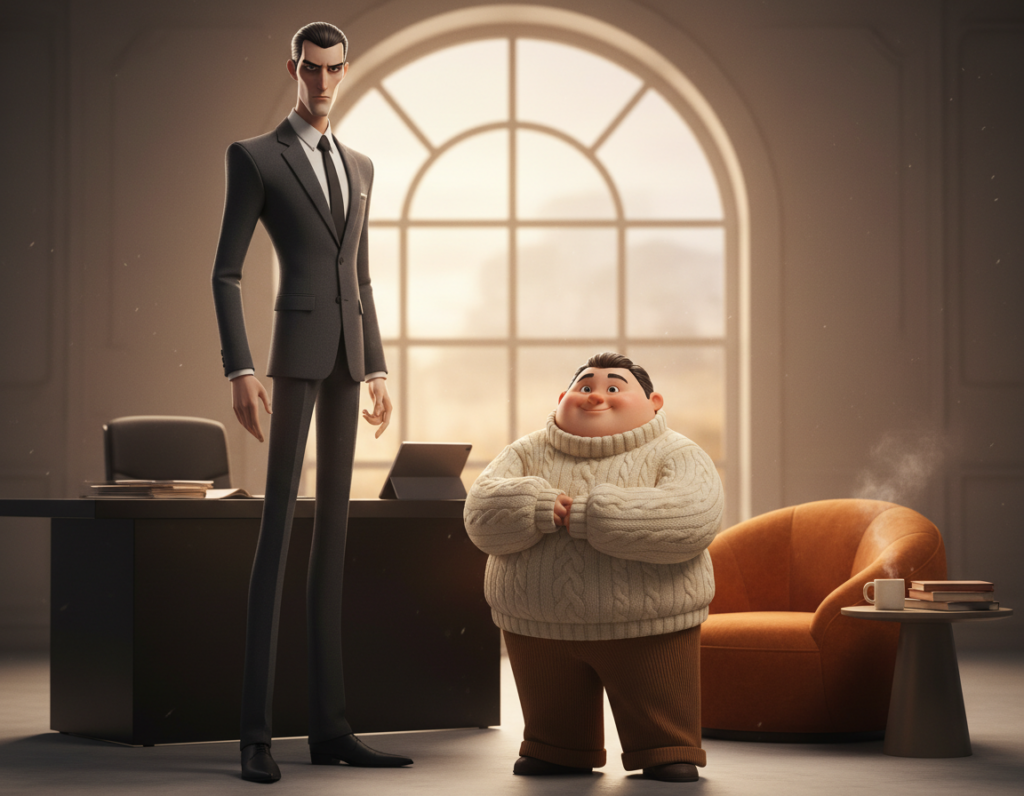
Small shifts in balance can flip a figure from calm authority to unpredictable danger.
Symmetry often reads as order and control. Designers use vertical lines and mirrored forms to make a character feel steady and royal.
Asymmetry tells a different story. Jaehoon Kim used an uneven outline for the iconic clicker to signal menace and surprise.
- Orderly forms: Symmetrical characters suggest tradition, stability, and power.
- Chaotic forms: Asymmetry implies danger, motion, and unpredictability—exactly what Kim achieved with the clicker.
- Adjust the pose: A tweak to limbs or props can change the overall balance and shift the viewer’s focus.
- Contrast roles: Pair calm, balanced figures with wild, off-kilter ones to clarify roles in your story.
By choosing how much symmetry to use, you guide the eye and highlight specific traits. A thoughtful balance makes each character’s intent clear at a glance.
“Use balance as a storytelling tool—mirror for order, imbalance for drama.”
Applying the Golden Ratio for Visual Harmony
The golden ratio can turn a messy sketch into a harmonized form that the eye loves to follow.
Stephen Silver used this rule when shaping Kim Possible. He calls the golden ratio a secret weapon for balanced character design.
Creating Focal Points
Use the ratio to divide your concept into large, medium, and small zones. That layout guides the eyes along a clear path.
- Place high-contrast details in the small area—often around the face—to make the look snap into focus.
- Let the medium zone hold posture and props. Use light and shadow to support the composition.
- Keep the large area simple to preserve overall balance and let small details read at a lot of sizes.
Nature uses this proportion all the time, so applying it helps your work feel familiar and stable over time. Many pros rely on it to keep a silhouette and composition pleasing while the concept develops.
Utilizing Negative Space to Define Form
Negative space is an invisible tool that makes a shape sing against cluttered backgrounds. Use empty areas to carve clear gaps around a character so each limb and prop reads on its own.
Open the outline rather than squashing shapes together. This creates strong, separate shapes that the eye can sort quickly.
Every form should be intentional. Place space to guide the viewer to the most important zones and to keep the overall art legible in packed scenes.
- Leave breathing room between limbs and props so the main shape stays distinct.
- Turn silhouettes into puzzles solved at a glance by letting negative space define joints and tools.
- Test designs at small sizes; if the shape collapses, add separation until it reads.
Focus on space and intentional gaps to make designs memorable and easy to scan across posters, thumbnails, and games.
Mastering the Line of Action for Dynamic Poses
The path of movement through a figure gives a pose its heartbeat. Use that central curve to unify limbs, weight, and intent so the viewer reads motion in an instant.
Key Poses in Animation
Preston Blair, in his 1948 book, argues that a strong silhouette must tell the story in two dimensions. Make sure each key pose reads as a single, clear shape.
Eric Goldberg adds that pairing the line of action with the silhouette rule gives a pose real strength. That combo makes motion feel purposeful and dramatic.
Maintaining Flow
Keep the body acting as one system. Treat the spine, hips, and shoulders as linked parts that pull motion through the whole figure.
- Avoid letting hands cover the face; this hides expression and weakens the pose.
- When the audience’s eyes follow the line of action, movement looks natural and magnetic.
- Test extremes: push a pose, then pull back until it still reads cleanly at small sizes.
“Combine a clear line of action with silhouette rules and the pose gains undeniable strength.”
Apply these ideas and your next piece of art will read stronger. The result helps the viewer grasp intent, emotion, and motion fast, whether in a thumbnail or a poster-sized work.
Technical Approaches for Digital and 3D Artists
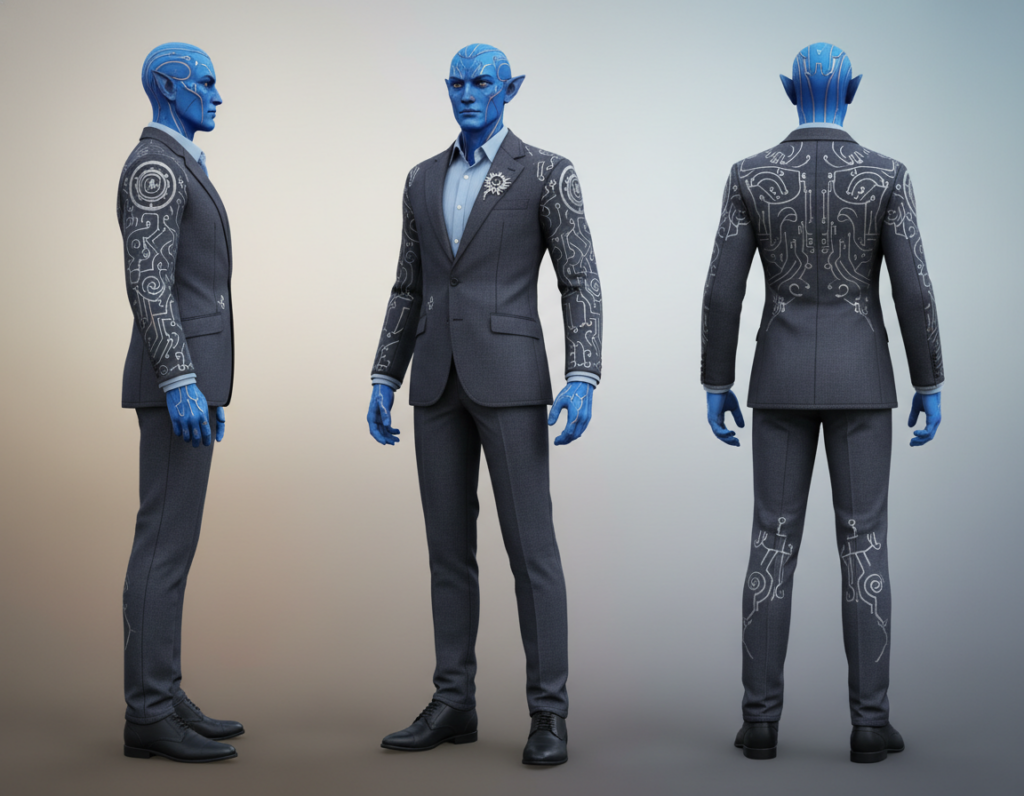
In 3D pipelines, the fastest way to judge a design is to view it as pure shape.
Quick light tests help you spot failures before you add textures. In Maya and similar tools, toggling the lights off shows the model as a flat black form. This reveals whether the pose and core shapes read from every camera angle.
Use proxy rigs like Akash and Vany to lock in organic posture and body flow. These rigs let students and teams focus on pose strength and the overall personality without getting lost in details.
- Toggle lights to view a flat silhouette and correct collapsed limbs.
- Nudge joints and props constantly so the form reads from all views.
- Adjust scene lighting to confirm the design keeps its intended shape in motion.
- Build each concept as a coordinated system so movement feels natural and consistent.
Final way: test early, iterate fast, and let light reveal the true strength of your concept.
Analyzing Successful Character Silhouettes
Examining professional sketches helps you spot the subtle rules that shape a strong look.
Grangel Studio in Barcelona offers clear visual development examples and thumbnail studies. Their work shows how tiny tests of shapes and pose guide the larger concept.
Study each example for composition, balance, and negative space. Notice how few details are needed when the overall design reads well at a glance.
- Spot how shapes define role and motion without color.
- Track how composition places focal points quickly.
- Take time to sketch many mini versions before settling on a final concept.
“Analyze pro thumbnails to learn the rules that make a figure feel whole.”
Like twisted trees in nature, a good outline should feel organic and balanced. Keep studying silhouettes of favorite works to sharpen your eye and improve your own character design over time.
Conclusion
When shape leads, an image stays memorable whether it’s on a billboard or a phone. Use a strong, simple outline to anchor your design and tell a clear story.
Apply the tips in this article to keep each character recognizable at any size. Simplicity is the base for work that scales and lasts.
Practice consistently and build a portfolio of strong, effective forms. For more practical guidance and resources on character design, visit character design resources.