Anúncios
Starting an art piece often feels like solving a complex puzzle. You want your work to stand out and feel alive on the paper. One line weight drawing technique transforms a flat image into a dynamic masterpiece by adding variety.
Variation in stroke thickness helps guide the eye across your work. It creates depth and adds a professional touch to your sketches. By changing the pressure of your tool, you introduce a new level of visual interest that keeps viewers engaged.
This guide explores how small changes in stroke width impact the final result. We will cover the basics of controlling your pressure to highlight important details. You will find helpful tips to improve your creative skills today.
You will learn to use contrast effectively to make subjects pop from the page. Mastering these skills is essential for any creator seeking to improve. Let’s dive into the core concepts of this artistic method and grow your talent.
Key Takeaways:
Anúncios
- Understand Depth: Discover how varying thickness creates a sense of space and focus.
- Control Pressure: Learn to manage your tools for better artistic results and cleaner sketches.
Understanding the Fundamentals of Line Weight in Drawing
Line weight, a critical aspect of drawing, has been utilized by artists throughout history to convey emotion and create visual interest. Understanding the fundamentals of line weight is essential for artists looking to enhance their sketches and drawings.
What Is Line Weight?
Line weight refers to the varying thickness or heaviness of lines used in a drawing. It is a powerful tool that can add depth, dimension, and emotion to a piece of art. By manipulating line weight, artists can guide the viewer’s eye through the composition and create a sense of hierarchy.
The Role of Line Variation in Visual Communication
Line variation plays a crucial role in visual communication, as it can convey different emotions and moods. For instance, bold lines can suggest confidence and strength, while delicate lines may imply fragility or subtlety. Effective use of line variation can enhance the overall impact of a drawing.
Anúncios
Historical Context of Line Weight in Art
The use of line weight in art dates back centuries, with various artists and styles employing it in different ways. From the intricate drawings of Leonardo da Vinci to the expressive lines of Vincent van Gogh, line weight has been a fundamental element in the creation of visually compelling art.
| Artist | Style | Use of Line Weight |
|---|---|---|
| Leonardo da Vinci | Renaissance | Intricate and detailed |
| Vincent van Gogh | Post-Impressionism | Expressive and emotive |
| Pablo Picasso | Cubism | Geometric and fragmented |
By understanding the historical context and role of line weight in visual communication, artists can better appreciate its significance and apply it effectively in their own work.
Why Line Weight Drawing Technique Matters for Artists
Line weight drawing technique is a powerful tool in an artist’s arsenal, enabling them to create more engaging and dynamic artwork. By varying the thickness and darkness of lines, artists can add complexity and interest to their sketches.
Creating Depth and Dimension
Varying line weights can create a sense of depth and dimension in a drawing. Thicker lines can be used to define the foreground, while thinner lines can suggest background elements, creating a sense of layering.
This technique is particularly effective in landscape and architectural drawings, where creating a sense of distance is crucial. By applying heavier lines to elements in the foreground and lighter lines to those in the background, artists can create a convincing illusion of depth.
Establishing Focal Points and Emphasis
Line weight can also be used to establish focal points within a composition. By using thicker or darker lines for certain elements, artists can draw the viewer’s eye to specific parts of the drawing.
- Heavy lines can be used to outline the main subject.
- Medium weight lines can define secondary elements.
- Light lines can suggest background details or textures.
Conveying Light, Shadow, and Form
The strategic use of line weight can also help convey light, shadow, and form. Varying line weights can suggest the play of light on different surfaces, with heavier lines indicating areas in shadow and lighter lines suggesting highlighted areas.
This technique is essential for creating a sense of volume and three-dimensionality in a drawing. By carefully controlling line weight, artists can create a nuanced and detailed representation of their subject.
Essential Tools and Materials for Varying Line Weight
To master line weight, artists must familiarize themselves with a range of drawing tools and materials. The versatility of line weight in a sketch is significantly influenced by the choice of these tools.
Pencils and Graphite Options
Pencils are a fundamental tool for artists, offering a range of line weights through different graphite grades. The hardness or softness of the graphite core determines the line’s lightness or darkness.
Hard vs. Soft Lead Grades
Graphite pencils are categorized into hard (H) and soft (B) grades. Hard leads (e.g., 2H, 4H, 6H) produce lighter, finer lines suitable for detailed work, while soft leads (e.g., 2B, 4B, 6B) create darker, thicker lines ideal for shading and expressive sketches.
Mechanical Pencils for Precision
Mechanical pencils offer precision and consistency, with leads available in various hardness grades. They are ideal for detailed drawings and technical sketches where uniform line widths are required.
Pens and Ink Tools
Pens and ink provide a range of line weights and are used for both artistic expression and technical drawing. The choice between different types of pens can significantly affect the outcome of a sketch.
Technical Pens and Fineliners
Technical pens and fineliners are known for their precision and are often used in technical drawing and illustration. They come with tips of various sizes, allowing for a range of line widths.
Brush Pens and Dip Pens
Brush pens and dip pens offer more expressive line variations. Brush pens mimic the effect of a brush, while dip pens allow for a high degree of control over line width and character.
Digital Tools for Line Weight Control
Digital drawing tools have become increasingly popular, offering a range of options for controlling line weight. Software and hardware like graphics tablets and styluses can mimic traditional media or offer unique digital effects.
| Tool Type | Line Weight Control | Best Use |
|---|---|---|
| Graphite Pencils | Variable, based on pressure and grade | Sketching, shading |
| Technical Pens | Precise, consistent line widths | Technical drawing, illustration |
| Brush Pens | Variable, expressive lines | Calligraphy, expressive sketches |
| Digital Tools | Highly variable, software-dependent | Digital art, illustrations |
Understanding the characteristics of each tool is crucial for achieving the desired line weights in a sketch. By mastering a variety of tools, artists can expand their creative possibilities.
Core Techniques for Controlling Line Weight
Line weight control is a versatile technique that allows artists to convey a range of emotions and ideas through their work. By mastering various methods to manipulate line weight, artists can significantly enhance the visual appeal and effectiveness of their sketches.
Pressure Control Methods are fundamental to varying line weight. By adjusting the pressure applied to a drawing tool, artists can achieve a range of line widths and densities. For instance, applying more pressure with a pencil or pen can produce darker, thicker lines, while lighter pressure results in finer, more delicate lines.
Pressure Control Methods
To effectively utilize pressure control, artists should practice varying the pressure to achieve different line weights. This can be done through simple exercises such as drawing lines with gradually increasing or decreasing pressure.
Tool Angle and Positioning
The angle and positioning of a drawing tool also significantly impact line weight. By tilting a pen or pencil, artists can alter the line width and character. For example, holding a pencil at a shallow angle can produce broader lines, while a steeper angle results in finer lines.
Speed and Gestural Approaches
Speed and gestural drawing involve using the speed and movement of the drawing gesture to influence line weight. Faster, more expressive gestures can create dynamic, varied lines that capture the energy and movement of a subject.
Layering and Building Lines
Layering and building lines is another effective technique for controlling line weight. By carefully layering lines of different weights and densities, artists can achieve complex, nuanced textures and shading effects.
By combining these core techniques—pressure control, tool angle and positioning, speed and gestural approaches, and layering and building lines—artists can achieve a high level of control over line weight in their sketches, enabling them to create more engaging, expressive, and visually appealing artwork.
Applying Line Weight to Create Hierarchy and Structure
The strategic application of line weight is essential for guiding the viewer’s eye through a sketch. By varying line weights, artists can create a clear visual hierarchy and structure, making their work more engaging and easier to interpret.
To achieve this, artists can follow several key techniques. Firstly, it’s crucial to understand how different line weights can be used to distinguish between various elements in a composition.
Outlining Primary Subjects with Heavy Lines
Using heavy lines for the primary subjects in a drawing helps to establish a clear focal point. This technique ensures that the viewer’s attention is drawn to the most important elements first. For instance, in architectural drawings, heavy lines are often used to outline the main structures, as seen in the practices discussed on architectural graphics.
Using Medium Weight for Secondary Elements
Medium weight lines are ideal for secondary elements that support the primary subjects without overpowering them. These lines help to add depth and context to the drawing without distracting from the main focus.
Employing Light Lines for Details and Texture
Light lines are perfect for adding fine details and texture to a drawing. They provide a way to include intricate information without overwhelming the viewer. This technique is particularly useful in figure drawing and portraiture, where subtle variations in line weight can convey a range of expressions and emotions.
Creating Spatial Relationships Through Line Variation
Line variation is also key to creating spatial relationships within a composition. By using different line weights, artists can suggest depth and distance, guiding the viewer’s eye through the scene. For example, heavier lines can be used for foreground elements, while lighter lines can be used for background details.
To illustrate the effectiveness of line weight in creating hierarchy and structure, consider the following table:
| Line Weight | Application | Effect |
|---|---|---|
| Heavy | Primary subjects | Establishes focal point |
| Medium | Secondary elements | Adds depth and context |
| Light | Details and texture | Provides intricate information |
By mastering the use of line weight, artists can significantly enhance the clarity and impact of their work. Whether in architectural drawings, figure drawing, or landscape sketches, the thoughtful application of line weight is crucial for creating a compelling and structured visual narrative.
Advanced Applications of Line Weight in Different Sketching Styles
The application of line weight varies significantly across different sketching disciplines, each with its own set of challenges and opportunities. Artists must adapt their use of line weight to suit the specific demands of their chosen style, whether it’s the precision required for technical drawing or the expressive freedom of character design.
Architectural and Technical Drawing
In architectural and technical drawing, line weight plays a critical role in communicating complex information clearly and accurately. Heavy lines are often used to outline primary structures, while lighter lines denote secondary elements or dimensions. This hierarchy helps viewers quickly understand the drawing’s intent.
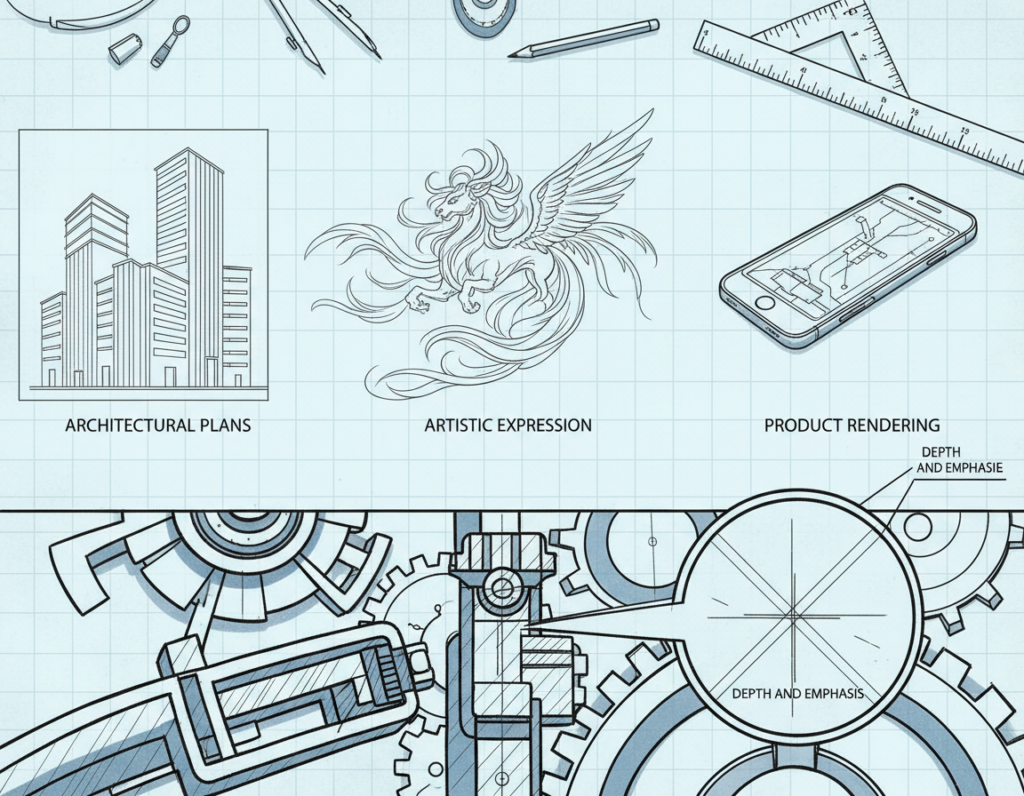
Figure Drawing and Portraiture
Figure drawing and portraiture rely heavily on line weight to capture the subtleties of human anatomy and expression. Artists use varying line weights to suggest volume, texture, and emotion, creating a more engaging and lifelike representation of their subjects.
Landscape and Environmental Sketches
In landscape and environmental sketches, line weight is used to convey depth, distance, and atmosphere. Lighter lines may be used for background elements, gradually increasing in weight for features closer to the viewer, thus creating a sense of layering and dimensionality.
Character Design and Illustration
Character design and illustration often employ line weight to achieve a specific aesthetic or mood. Thicker lines can give characters a bold, graphic appearance, while varied line weights can add a dynamic, expressive quality to the illustration.
By mastering the application of line weight in these diverse sketching styles, artists can enhance their work, making it more effective at communicating their intended message or emotion.
Common Mistakes to Avoid When Working with Line Weight
Achieving mastery over line weight requires not only understanding its principles but also avoiding certain mistakes that can compromise the quality of a sketch. Line weight is a powerful tool that can elevate a drawing from simple to sophisticated, but its misuse can lead to visual confusion and a lack of clarity.
Artists often encounter several pitfalls when working with line weight. Being aware of these common mistakes is the first step towards creating more effective and engaging drawings.
Overusing Heavy Lines Throughout
One of the most common mistakes is overusing heavy lines throughout a drawing. While heavy lines can be used to create emphasis and draw attention to certain elements, using them excessively can make a sketch look cluttered and overly dense.
Tip: Reserve heavy lines for the most important elements in your drawing, and use lighter lines for secondary details.
Inconsistent Line Quality and Variation
Inconsistent line quality and variation can also detract from a drawing. Line weight should be varied to create visual interest and convey depth and dimension.
“The quality of line is perhaps the most expressive element in drawing.”
To achieve consistency, practice controlling your drawing tools and pay attention to the subtleties of line weight.
Neglecting the Relationship Between Lines
The relationship between lines is crucial in creating a cohesive and harmonious drawing. Neglecting this relationship can result in a disjointed and confusing composition.
| Line Relationship | Effect on Drawing |
|---|---|
| Consistent and harmonious | Creates a cohesive composition |
| Inconsistent and disjointed | Results in visual confusion |
Ignoring Light Source and Form
Ignoring the light source and the form of the subject can lead to inaccurate and unconvincing line weight. Line weight should be used to convey the three-dimensional quality of the subject.
Paying attention to the light source and the form of the subject will help you create more nuanced and realistic line weight.
By being aware of these common mistakes and taking steps to avoid them, artists can harness the full potential of line weight to create more effective and engaging drawings.
Practical Exercises to Master Line Weight Control
Effective line weight control is a skill that can be developed through dedicated practice and the right exercises. Mastering this skill can significantly enhance an artist’s ability to create visually appealing and balanced sketches. In this section, we will explore several practical exercises designed to help artists improve their line weight control.
Warm-Up Drills for Pressure Control
Warm-up drills are essential for loosening up the drawing muscles and developing pressure control. One effective exercise involves drawing a series of lines with varying pressure, from very light to very heavy. Start with light, gentle strokes and gradually increase the pressure to achieve a range of line weights. This exercise helps in understanding how different tools respond to varying pressures.
Another useful drill is to create a grid and fill each section with a different line weight. This exercise not only practices pressure control but also helps in achieving consistency across different line weights.
Object Studies Focusing on Edge Quality
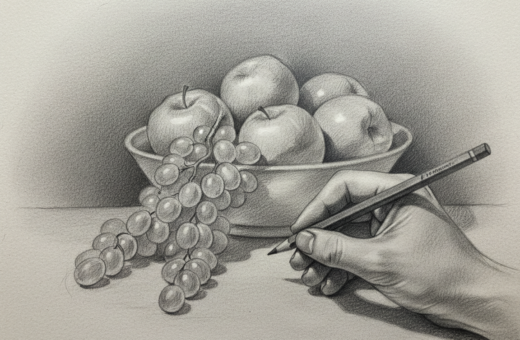
Studying objects with a focus on edge quality is an excellent way to practice line weight control. Choose an object with varied edges, such as a still-life composition with different textures. Observe how the edges vary in softness and hardness, and practice drawing these edges with appropriate line weights. Soft edges can be rendered with lighter, more gentle lines, while hard edges require more defined, heavier lines.
Contour Drawing with Deliberate Variation
Contour drawing is a valuable technique for practicing line weight control. By deliberately varying line weight during contour drawing, artists can create more dynamic and engaging drawings. Focus on the contours of the subject and vary the line weight to convey volume, texture, and form.
“The quality of the line is what makes drawing alive.” –
Copying Master Works to Study Technique
Copying the works of master artists is a time-tested method for learning various techniques, including line weight control. Study the line work in drawings and sketches by renowned artists. Analyze how they used line weight to create emphasis, convey texture, and suggest form. Replicating these works can provide valuable insights into the techniques used by masters.
By incorporating these exercises into their regular practice routine, artists can significantly improve their line weight control and overall drawing skills.
Conclusion
Mastering line weight drawing technique is a crucial skill for artists seeking to elevate their sketches and convey depth, emotion, and complexity. By understanding the fundamentals of line weight and its role in visual communication, artists can create visually appealing and effective artwork.
Through the use of varying line weights, artists can establish focal points, convey light and shadow, and create a sense of hierarchy and structure in their compositions. By practicing core techniques such as pressure control, tool angle, and layering, artists can develop the skills needed to effectively utilize line weight in their work.
As artists continue to hone their line weight drawing technique, they will be able to enhance their artistic expression and bring their creative visions to life. By incorporating line weight into their artistic practice, artists can add nuance and sophistication to their work, ultimately taking their art to the next level.